ARTICLE
What is the Ideal Churn Rate for SaaS Companies in 2026
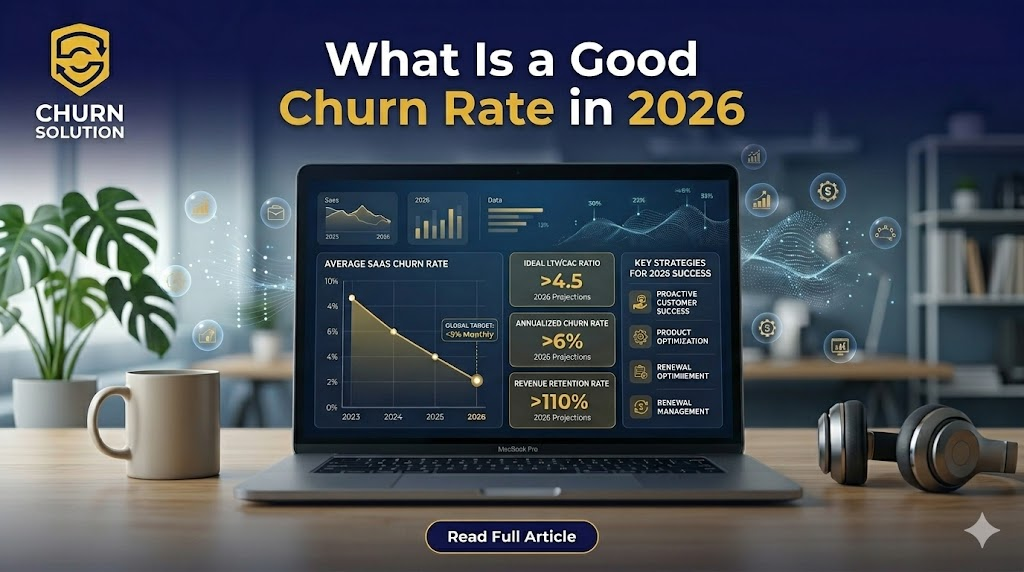
In today’s SaaS industry, growth isn’t about acquiring customers; it’s about retaining them. With the growing trend of rising expenditure in software and increased selectiveness on behalf of businesses towards their chosen tools, churn rate stands out as the most telling metric.
The churn rate represents the percentage of customers leaving your product during a certain period. Even though it may seem straightforward to compute, its implications are profound. High churn rate reflects weaknesses of any sort while low churn suggests that your customers keep getting enough value out of your offerings.
A significant challenge associated with churn rate is that it occurs quietly. Research estimates that less than 4% of dissatisfied customers will complain before leaving. In other words, churn rate can be considered one of the truest and yet neglected measures of business success.
Why churn is one of the most important SaaS metrics
Churn helps SaaS businesses monitor their customer base. In the subscription-based business model, churn rate plays an even greater role, as the company’s income is determined by how many customers stick around and not how many sales they make.
Monitoring churn enables companies to:
- Pinpoint areas for improvement in the customer experience
- Detect disengagement before customers unsubscribe
- Determine whether the offering continues to provide value
Monitoring churn becomes critical, especially in times of uncertainty in the economy. Recent figures show that SaaS expenditure per employee rose by 27% in 2024, while prices of software are increasing at a rate higher than inflation. Companies, therefore, have no choice but to scrutinize their subscriptions closely, and consequently, churn management is increasingly difficult.
Calculating churn rate
Determining whether your churn rate is good requires calculating it first. The basic formula used in this calculation is:
Churn Rate = (Lost Customers / Total Customers at the Start of the Period) × 100
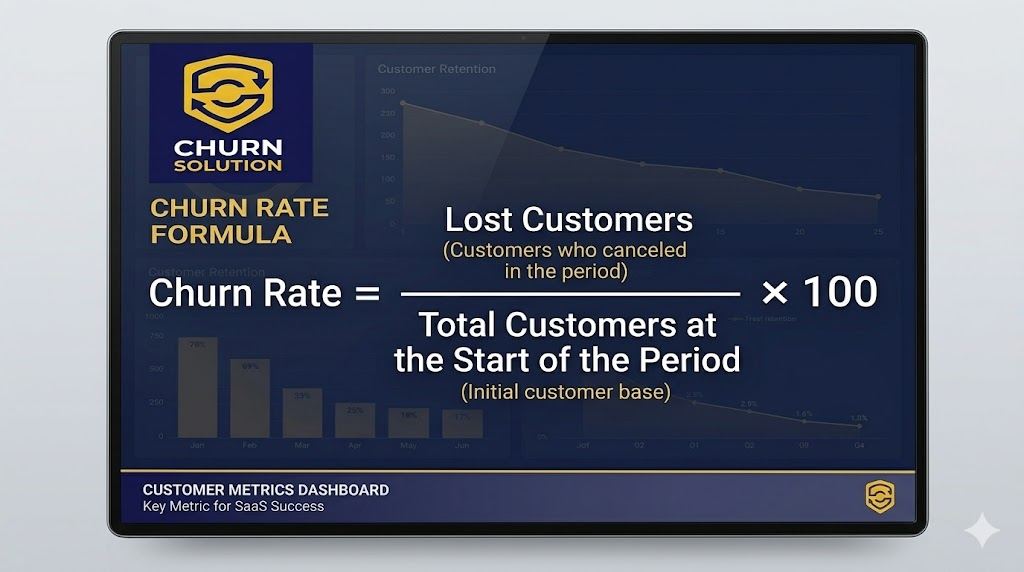
If you begin with 1,000 customers at the start of a month but lose ten, then the churn rate for that month would be 1%.
The figure might look small at first sight, but remember, churn rates accumulate over time. A 1% monthly churn means a yearly rate of about 12%, and this will affect company growth.
Different methods exist when calculating churn rate:
- Customer (or logo) churn refers to the percentage of user losses
- Revenue churn refers to revenue loss
- Net revenue churn considers the gains from expansion revenues of existing clients
Even in successful SaaS businesses, net revenue churn can be negative since customer revenue gains may outweigh losses.
What’s an ideal churn rate in SaaS companies?
There is no standard figure; however, there are robust recommendations regarding the goals for companies in this industry.
In most cases, sustainable growth-oriented SaaS businesses maintain annual churn rates below 5%. Nevertheless, acceptable churn rates greatly depend on the stage of growth, which means:
- For early-stage companies (<$300K ARR): About 6.5% churn per month
- Growth phase ($1M-$3M ARR): 3.7% churn per month
- Scale-up phase ($8M+ ARR): 3.1% churn per month
- Large SaaS (> $15M ARR): 1.8% net churn per month
It’s important to understand that churn will decrease as companies perfect their product and align more closely with what customers want.
It’s also worth noting the distinction between monthly churn and annual churn. A company with 10% monthly churn churns at about 72% annually—meaning you’ll churn almost all of your customers in a single year. In order to keep an acceptable 5% annual churn rate, a company must have a monthly churn of under 0.5%.
The impact of contract length on churn
There are studies that found out that:
- Annual contracts churn at a rate of about 8.5%
- Month-to-month contracts churn up to 16%
That’s why it’s common for SaaS companies to promote long-term contracts, not only for cash flow, but also for retaining customers.
Churn by industry
Since churn depends greatly on the industry, it’s crucial to take this into account when benchmarking.
Recent statistics demonstrate:
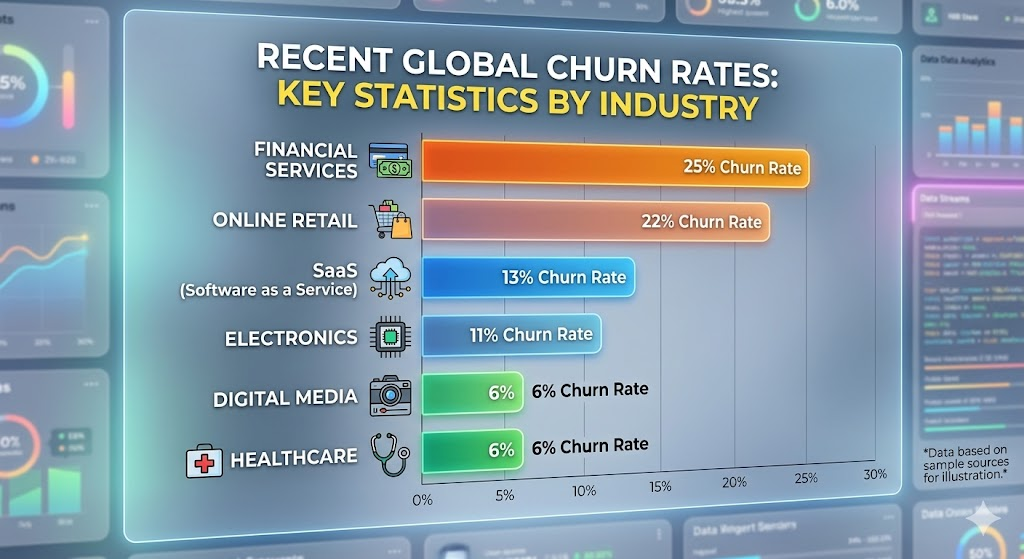
- Financial services: ~25% churn
- Online retail: ~22%
- SaaS: ~13%
- Electronics: ~11%
- Digital media: ~6%
- Healthcare: ~6%
Thus, a high churn rate in one industry could be totally fine in another.
Reasons why customers churn
Customer churn almost never occurs due to one reason alone. Customer churn is caused by a cumulative effect of several points of friction.
Some reasons are bad customer experience, lack of customer engagement, price issues, and not addressing product requirements. The truth is that most customers churn not because the product isn’t good; rather, the product is less valuable than before.
It’s important to know these reasons, but taking action after customers have churned is too late.
Predictive Churn Management becoming mainstream
One of the key emerging trends in SaaS is the evolution from reactive to predictive churn management.
Instead of waiting to see cancellations, companies now analyze behavior patterns and churn models based on artificial intelligence. Up to 46% of all SaaS businesses are using churn prediction models right now, and some advanced models predict accurately in 88% of cases.
These include:
- Reduction in usage of your product/service
- Reduced frequency of engagements
- Customer service dissatisfaction
- Under-utilization of functionalities
Companies using these solutions have had a reduction in their churn rates by 10–15% within a period of 12–18 months, showing the significance of early identification.
Churn Solution – A Churn Prevention Solution
The solution to a churn problem is definitely not an individual task. A systematic approach is required to consistently track customer behavior, identify and act on early warning signs, and especially when offboarding the customer. And here is where the full potential of Churn Solution kicks in.
Churn Solution is a churn prevention solution that helps SaaS companies reduce their churn rates by combining behavioral analytics, customer success activities, and automated retention processes all in one platform. Whereas most solutions require you to wait until the cancellation, Churn Solution identifies early signs of offboarding and prevents the churn. It’s also widely used in order to track customer health and monitor engagement levels.
Churn Solution operates by helping SaaS companies go through three main stages:
- Detecting churn warning signals such as low usage, low feature adoption, and increased support friction to assess customer health
- Initiating proactive communication with customers before they cancel, helping solve issues while they are still active
- Establishing a feedback loop and AI tools to analyze churn data and improve product, pricing, and customer success processes
Conclusion
While churn rate is a measure, it is ultimately an indication of how a business creates value. The SaaS companies that will succeed in 2026 will not necessarily be those with the fastest growth but those who manage to retain their customers for the longest periods of time.
With proper tracking, benchmarking, and churn management, businesses can harness churn and use it for good.
- Why churn is one of the most important SaaS metrics
- Calculating churn rate
- What’s an ideal churn rate in SaaS companies?
- The impact of contract length on churn
- Churn by industry
- Reasons why customers churn
- Predictive Churn Management becoming mainstream
- Churn Solution – A Churn Prevention Solution
- Conclusion

Churn solution that turns your customers right around.
Related Articles
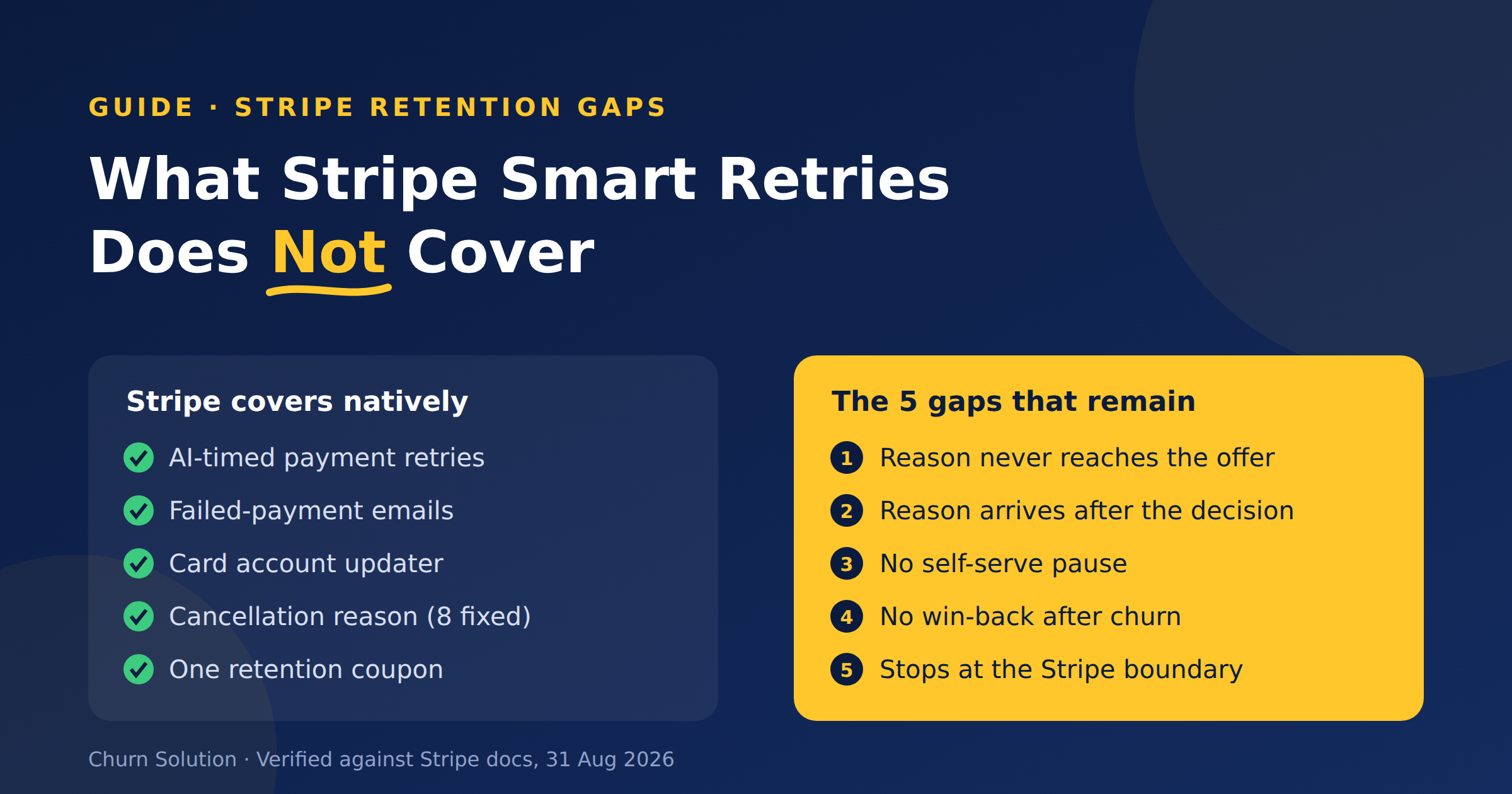
What Stripe Smart Retries Does Not Cover
Stripe Smart Retries recovers failed payments but doesn’t run retention. Here are the five gaps that remain, sourced from Stripe’s…

Membership Community Churn: The Members Who Quit Without Clicking Cancel
Quiet churn is the real leak: members who never clicked “cancel” at all. A card expires. A bank declines a…

Subscription Churn Dashboard: The 2026 Guide to Actionable Revenue Intelligence
Up to 40% of subscription churn is involuntary, meaning your customers aren’t choosing to leave; they’re being forced out by…