ARTICLE
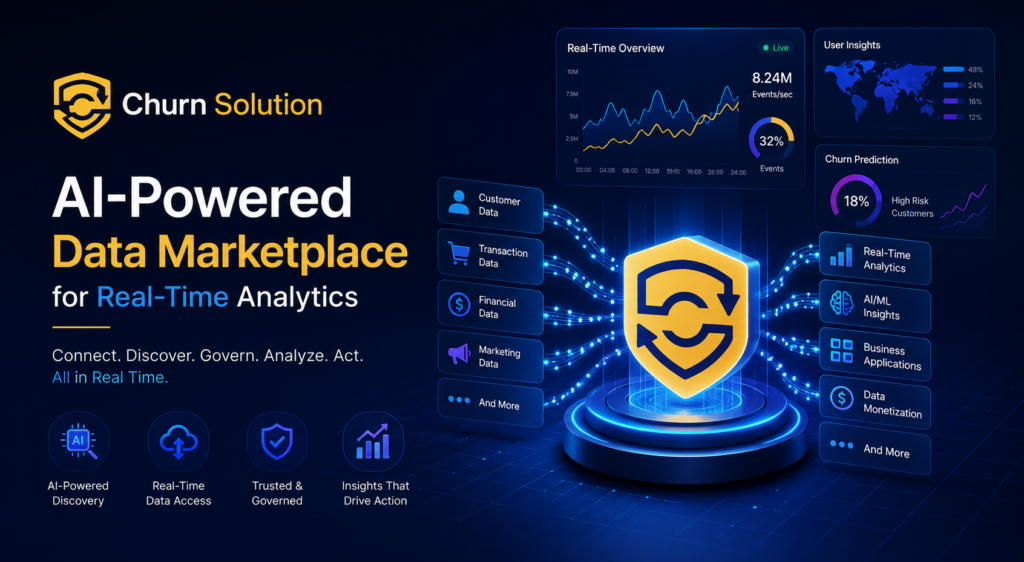
AI-Powered Data Marketplace for Real-Time Analytics
Picture this: Your marketing team needs fresh competitor pricing in the next few days. The product team wants consumer sentiment from the last 48 hours. And your operations lead needs supply chain signals before next week’s board meeting.
In the past, each request had its own agonising cycle. You’d assign tasks to engineers and wait. By the time reports arrived, it was often too late.
Today, that process has been streamlined and sped up by AI-powered data marketplaces. They give you access to pre-loaded data and intelligent layers which analyse signals in real-time.
That’s where a good data marketplace changes everything. Instead of waiting on engineers, you tap pre-built, AI-enriched datasets delivered straight to your analytics tools.
In this guide, we’ll explore the concept of AI-driven data marketplaces, how they work, and how to make the most of them. But first
What is an AI-Powered Data Marketplace?
An AI-powered data marketplace is a central platform where businesses access structured, pre-cleaned datasets. The data covers everything from eCommerce listings to social signals, market trends, and business intelligence.
Unlike traditional data exchanges that deliver raw data files, AI marketplaces supply you with datasets that are pre-classified with sentiment scores, entity recognition, along with other metadata. The AI layer also makes sure that the data sets are up to date, removes redundant data and any anomalies before it reaches the recipient.
This translates to analytics teams having to put in less time on data preparation and more time on data interpretation. The decision makers receive insights as events unfold, not days or weeks after.
How AI-Powered Data Marketplaces Power Real-Time Analytics
There are three key requirements for real-time analytics: data that is accurate, data that is well-structured, and data that is interpreted immediately. AI-driven marketplaces addresses all three problems. Here’s how.
- They take away the restriction on the data source.
Historically, getting fresh data meant you had to build in house pipelines, had to maintain the infrastructure, all while complying with each source’s terms of service. A large amount of engineering effort was spent in sustaining pipelines rather than on decisions.
Today, the AI powered marketplace has shifted this burden to platform providers. They are in charge of gathering, organizing and updating public information as needed and according to rules and regulations. You simply need to select the data set you wish to connect and it will be delivered via an API endpoint or scheduled delivery to your analytics tools.
In minutes, your business intelligence dashboards are updated with the most recent product prices, job postings or customer reviews. This shifts your team from “we need this data” to “here’s what the data says.”
- They deliver structured, analytics-ready datasets
Raw data can slow analytics. See, before the data can be used within a model or dashboard, it must be standardised, deduplicated, it must have missing values added and data fields aligned between sources.
AI-driven marketplaces handle these in advance. Every record is cleaned, structured and enhanced with machine learning models. Some platforms even attach contextual metadata such as geographical tags, industry classifications or temporal markers.
The dataset is pre-structured, allowing your analytics stack to easily integrate with existing visualizations, predictive models, or reporting tools. This shrinks the cycle time from acquisition to insight from days to minutes.
- They support continuous data refresh
We all know how volatile the markets can be; they often shift rapidly and prices fluctuate within hours. Even in business, the hiring trends can shift within weeks while consumer sentiments often swing within a single news cycle.
One time static data misses these rapid movements entirely.
However, AI-powered marketplaces can solve this problem by offering frequent and event triggered updates.
So, in the end, the user has real time data that reflects the present. The data provided can be queried on a regular basis, such as every few minutes or every hour, and even for specific signals.
- They make advanced analytics accessible to smaller teams
Hiring engineers, analysts and infrastructure personnel for advanced analytics can be quite expensive for a small to mid-sized business.
AI-powered data marketplaces alleviate this obstacle.
For smaller teams, they can subscribe to enriched data sets and then use them in conjunction with no-code or low code analytics platforms. This makes it easier for a small team to operate what would have been a full analytics department.
The days when collecting the most data was enough are gone. It’s now about who acts on it fastest.
How to Maximize the Value of an AI-Driven Data Marketplace.
Signing up with a marketplace is just the beginning. You then need to have a clear strategy on how to select, integrate and manage the data. Here are 5 practices to help.
- Start with the decision, not the data set.
Many businesses have acquired datasets they believe they will use, but discover months later that none of the data was related to a specific decision. To avoid scenarios like this, try and work backwards from the decision.
Determine the question you need answered, then the metric you want to track or action you want taken. Then, identify the data set that directly answers that question. This helps keep your subscriptions costs small and your analytics focused.
- Validate dataset quality before scaling
Not every data in a marketplace is the same. Some sources are more informative, some are more frequently updated than others and others have better structure.
Test a sample of data with your validation pipeline before adding the dataset to a production analytics workflow. Look for completeness, freshness, schema consistency and edge case coverage. If the dataset passes the test, scale it up. Otherwise, find another one or request a custom version.
- Merge data from Marketplaces with Proprietary Data
Marketplace datasets give you breadth; a wide view of what’s happening outside your walls. Your internal data gives you depth; what’s happening with your actual customers. Together, they produce analytics that are both comprehensive and specific.
Use external pricing information, combined with your own sales information to model elasticity. Alternatively, use outside job posting data and your internal recruitment process to forecast available talent. The best competitive signals are created by combining internal data with external data.
- Build a compliance and governance layer
Third-party data still requires careful governance. Ensure that all data sets used were obtained from public sources, in accordance with the applicable laws and regulations, website terms of use, and personal data protection requirements.
Keep track of data lineage, refresh frequency and licensing terms. In the event that your company operates across regions, take into account jurisdiction-specific laws. Good governance ensures you don’t run into legal liabilities, and helps you develop internal trust on the insights you produce.
- Pair marketplace data to smart analytics tools.
While raw access to fresh data is beneficial, the true power lies in combining it with AI-powered analysis. Forecasting models, anomaly detection systems, and natural language reporting tools can access marketplace feeds and come up with insights without having to be prodded.
This is where you move from “I have data” to “the data is working for me.” Modern AI analytics workflow guides can give you a better understanding of how AI analytics tools are integrated into the workflow.
Closing Words
AI data marketplaces are transforming the way businesses use and leverage external data. They reduce sourcing time, provide enriched data content, enable frequent updates and unlock advanced analytics for small and large teams.
If you’re still building every pipeline inhouse, you are likely spending more engineering effort than actual analytical value. Businesses that will be successful in the coming years aren’t the ones with the biggest data teams, but those with the fastest decision loops.
Start small. Find one business-related decision that relies on fresh external data. Identify a marketplace data source that supports that decision and track how quickly you can make that decision. Build from there.

Churn solution that turns your customers right around.
Related Articles
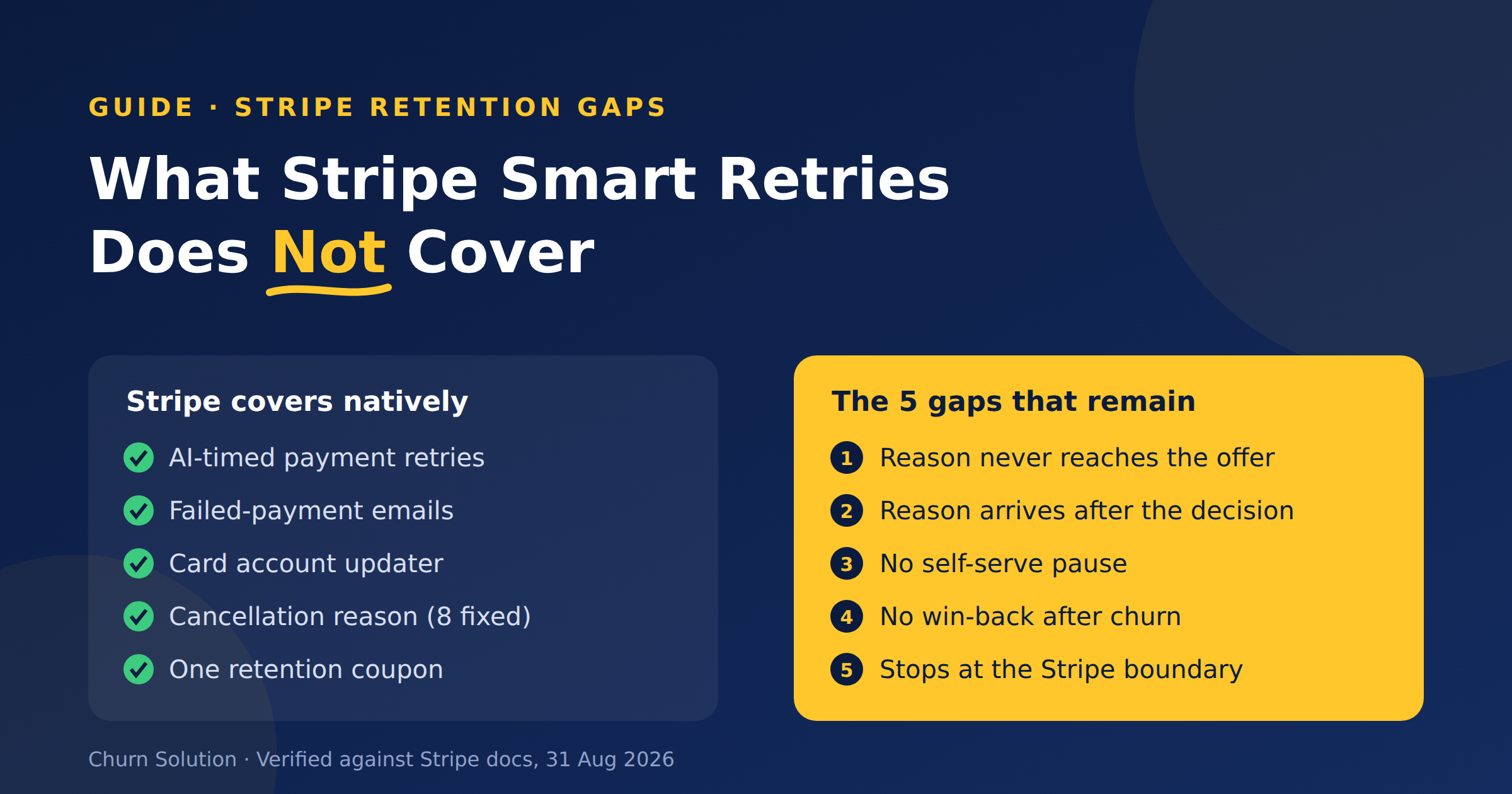
What Stripe Smart Retries Does Not Cover
Stripe Smart Retries recovers failed payments but doesn’t run retention. Here are the five gaps that remain, sourced from Stripe’s…

Membership Community Churn: The Members Who Quit Without Clicking Cancel
Quiet churn is the real leak: members who never clicked “cancel” at all. A card expires. A bank declines a…

Subscription Churn Dashboard: The 2026 Guide to Actionable Revenue Intelligence
Up to 40% of subscription churn is involuntary, meaning your customers aren’t choosing to leave; they’re being forced out by…