ARTICLE
How to Optimize Your Cancellation Flow: The 2026 Revenue Retention Playbook
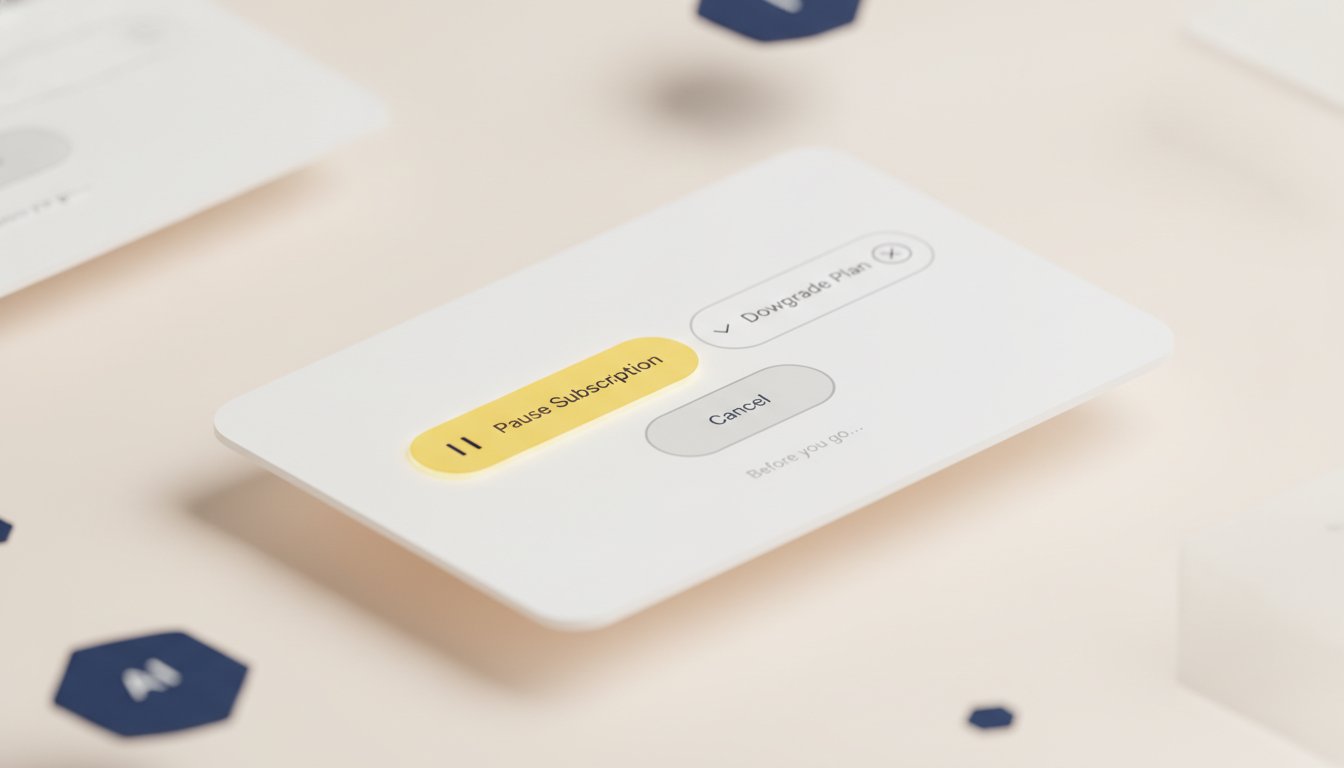
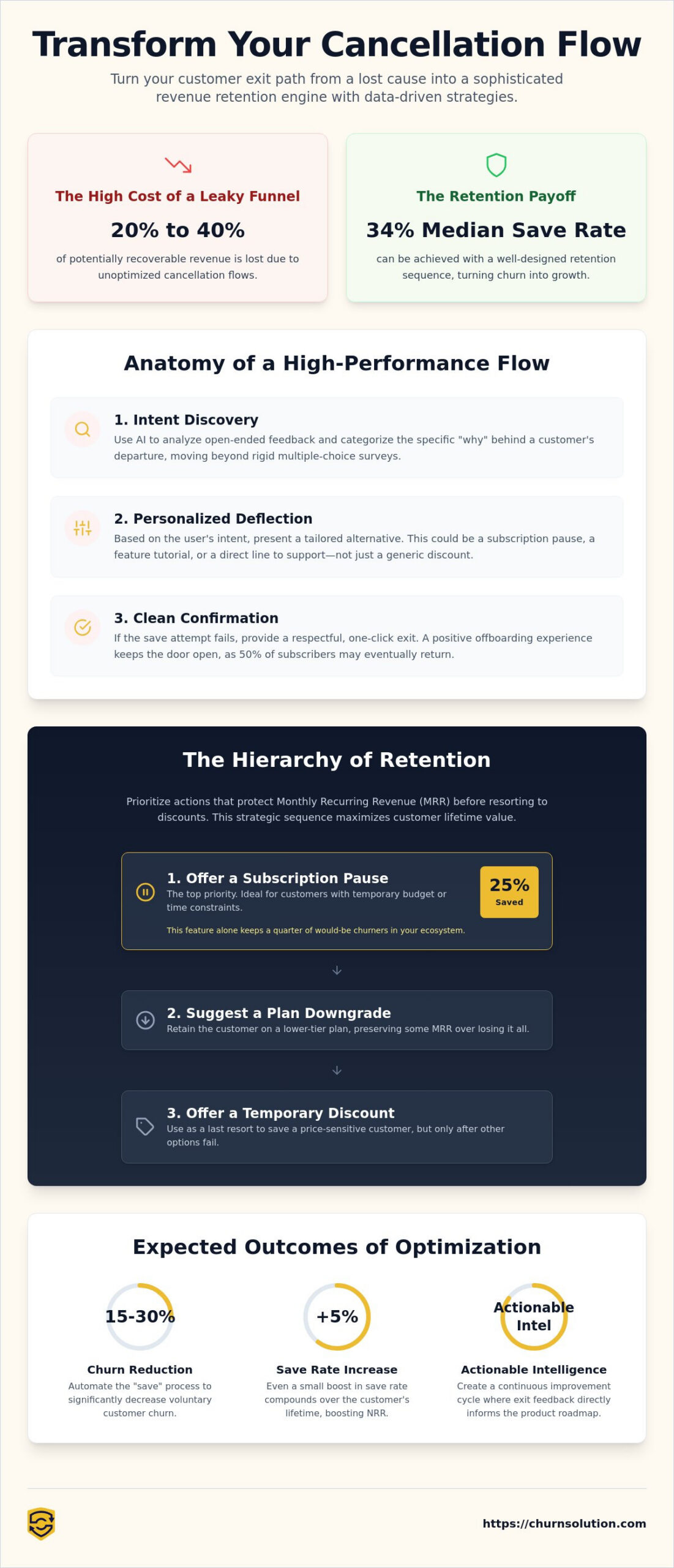
A well-designed retention sequence can capture a 34% median save rate, yet most subscription businesses treat their exit path as a lost cause. If you fail to optimize cancellation flow with precision, you are essentially leaving 20% to 40% of your potentially recoverable revenue on the table. You recognize that high voluntary churn is eroding your growth; however, generic “please stay” discounts are no longer effective in a market where 50% of subscribers who cancel may eventually return if the offboarding experience is handled correctly.
This playbook provides the exact data-driven strategies and UX frameworks required to transform your cancellation process into a sophisticated customer save engine. Even with the 2025 federal “Click-to-Cancel” rule vacation, state-level mandates in California and New York demand a higher standard of transparency that you must navigate. You will learn how to replace generic offers with AI-driven feedback loops and dynamic incentives that address the specific reasons users leave. We will detail how to automate the “save” process to reduce churn by 15-30% and implement “pause” functionality that keeps 25% of would-be churners in your ecosystem. This guide moves you from reactive damage control to proactive revenue retention.
Key Takeaways
- Redefine your exit path as a strategic diagnostic tool designed to extract actionable intelligence from departing users.
- Deploy AI-driven sentiment analysis to optimize cancellation flow logic and trigger hyper-personalized save offers in real-time.
- Establish a clear Retention Hierarchy that prioritizes subscription pauses and downgrades to protect MRR before offering discounts.
- Apply the “Golden Ratio” of UX friction to maintain regulatory compliance while creating meaningful opportunities for customer recovery.
- Synchronize your voluntary churn tactics with automated dunning processes to build a unified subscription revenue protection engine.
The Anatomy of a High-Performance Cancellation Flow
The cancellation flow is often the most neglected stage of the customer lifecycle. In 2026, viewing it as a desperate “Hail Mary” attempt to trap a user is a strategic failure. Instead, you must optimize cancellation flow architecture to serve as a high-fidelity diagnostic engine. This transition moves your business away from the deceptive “dark patterns” of the past, such as hidden buttons or forced phone calls, toward a transparent, value-driven framework. Modern buyers demand a frictionless but thoughtful exit. They want to leave easily, but they also want to be heard. A high-performance flow bridges this gap by offering a respectful offboarding process that simultaneously gathers the data required to improve your product.
To achieve this, your retention engine must rest on three core pillars. First, intent discovery uses AI to categorize the specific reason for departure through open-ended feedback. Second, personalized deflection presents a tailored alternative, such as a pause or a specific feature tutorial, based on that intent. Finally, clean confirmation provides a respectful, one-click exit if the save attempt fails. This structured approach ensures that every cancellation attempt either recovers a customer or provides a concrete data point for your growth strategy.
The Psychology of the Exit Intent
Users typically click “cancel” for two primary reasons: perceived lack of value or temporary budget constraints. There is a specific “relief” phase that occurs the moment a user finds the cancellation button; they feel they’ve regained control over their recurring expenses. To be effective, your flow must intercept this relief by acknowledging their control while immediately offering a solution that removes their specific pain point. If a user leaves with a positive sentiment, their future win-back potential remains high. If they leave frustrated by friction, they are gone forever.
Quantifying the Revenue Impact of Optimization
The financial implications of a high-performance flow are immediate and measurable. A 5% increase in your “save” rate doesn’t just protect current MRR; it compounds over the customer’s total lifetime. High-performing flows directly impact your Net Revenue Retention (NRR) by preventing voluntary churn and identifying opportunities for downgrades over total losses. For a deeper dive into these metrics, consult our Customer Churn Analysis guide. This framework allows you to calculate the precise ROI of every automated intervention and justifies the technical resources required to build a resilient retention engine.
Leveraging AI Feedback Analysis to Diagnose Churn
Static multiple-choice surveys are obsolete. They force users into rigid boxes that fail to capture the nuance of their departure, providing little more than surface-level metrics. To truly optimize cancellation flow performance, you must deploy AI Feedback Analysis to process open-ended responses in real-time. This technology identifies the emotional tone and specific complaints hidden within a user’s text. Sentiment analysis then dictates the immediate response. If a user expresses frustration with a technical bug, the system doesn’t offer a generic discount; it offers a direct line to a senior engineer or a bug-fix timeline. This level of responsiveness transforms a generic exit into a personalized intervention.
Data collection is only half the battle. You must bridge the gap between the exit survey and your product development roadmap. By aggregating AI-processed feedback, your product team can see which features are failing to deliver value or which specific friction points are driving the most churn. This creates a continuous improvement cycle where your retention efforts inform your growth strategy. You stop guessing why people leave and start knowing. This intelligence allows you to build a more resilient product that addresses churn at its source rather than just treating the symptoms.
Segmenting Users by Cancellation Reason
Effective retention requires surgical precision. You cannot treat a user leaving for budget reasons the same as one leaving because of a missing feature. Categorize churn into four primary buckets: technical issues, financial constraints, value-based gaps, and external factors like company acquisitions. Using sophisticated customer segmentation allows you to trigger dynamic flows tailored to these specific profiles. Industry data shows that segment-specific flows outperform generic ones by 40% in successful save rates. This granular approach ensures your resources are focused on the most recoverable segments while providing the exact incentive needed to secure a save.
Turning Exit Surveys into Actionable Data
Modern Exit Surveys must prioritize the unique friction points of the 2026 SaaS market. Users are more sensitive to “zombie accounts” and underutilized feature sets than ever before. Your surveys should identify these specifics and immediately trigger automated follow-up tasks. If a high-value enterprise account indicates they are leaving due to a lack of training, the system should instantly notify a Customer Success Manager to intervene. You can start building these automated loops today to ensure no high-value customer slips through the cracks without a fight. This automation ensures that your team acts on data while it is still fresh and the customer is still engaged in the portal.
The Hierarchy of Retention: Pause vs. Downgrade vs. Discount
Stop treating every cancellation intent with a blanket discount. This approach devalues your brand and erodes your margins. To protect your bottom line, you must implement a “Save Hierarchy.” This logical sequence prioritizes interventions based on their impact on Monthly Recurring Revenue (MRR). You start with a subscription pause to maintain the relationship. You then suggest a plan downgrade to keep them as a paying user at a lower tier. You only present a targeted discount as a final measure to prevent a total exit. You use Dynamic Offers to deliver these choices based on real-time user data. This structured methodology is the only way to truly optimize cancellation flow efficiency in a competitive 2026 market.
A successful hierarchy ensures your interventions match the user’s specific pain points. You should follow this order of operations:
- Subscription Pause: Removes financial friction while preserving user data and habits.
- Plan Downgrade: Matches the product tier to the user’s actual needs and keeps them paying.
- Strategic Discount: Provides a temporary incentive to bridge a short-term budget gap.
Why “Pause” is the Ultimate Retention Lever
The “pause” functionality is your most powerful retention tool. Research indicates that users who pause are three times more likely to return than those who cancel entirely. By offering a pause, you can capture up to 25% of would-be churners. These customers stay for an average of 5.5 additional months after they resume. Optimal durations typically include 1, 2, or 3-month windows. This flexibility removes financial pressure without severing the user relationship. For more on this strategy, read our Pause vs. Cancel comparison. It keeps the door open for reactivation while preventing the “zombie account” problem.
Implementing Dynamic Discounts and Credit Offers
Plan downgrades are often superior to discounts because they provide a permanent solution to value-based churn. While a discount is temporary, a downgrade aligns your pricing with the user’s actual usage patterns. Customers who downgrade stay for an average of 7 to 8 months longer than those who don’t. This keeps them in your ecosystem and preserves the opportunity for a future upsell. If a downgrade is rejected, move to dynamic discounts. Generic offers fail 90% of the time, so your incentives must be surgical. Consider using account credits instead of percentage-based discounts. Credits feel like “found money” to the user and encourage immediate re-engagement. Automate these incentives based on tenure and usage levels. This ensures that your most loyal customers receive the most significant reasons to stay.
UX and Design Best Practices for High-Conversion Flows
Design is a high-stakes psychological lever. To optimize cancellation flow conversion, you must calibrate the “Golden Ratio” of friction. This is the precise amount of resistance required to make a user reconsider their departure without triggering frustration or violating state-level transparency laws. In 2026, a frictionless exit is a regulatory requirement, but a thoughtful exit is a strategic necessity. You use design to intercept the momentum of the cancellation. By integrating social proof and loss aversion, you remind the user of the specific value they are forfeiting. Remind them of the hundreds of reports they have generated or the peer benchmarks they will lose access to. This shifts their internal focus from the cost of the subscription to the cost of the loss. A poorly designed interface will fail to optimize cancellation flow results, leading to unnecessary revenue loss and damaged brand sentiment.
The 5-Step Visual Framework
A high-retention flow follows a methodical sequence. You don’t just show a “Confirm” button; you guide the user through a diagnostic journey that prioritizes recovery. This structured framework ensures every step adds value:
- Step 1: The Confirmation of Intent. Acknowledge the request immediately to reduce defensive posturing and establish trust.
- Step 2: The Insight Query. Deploy an AI-driven feedback step to identify the root cause of churn before offering a solution.
- Step 3: The Tailored Alternative. Present a dynamic save offer, such as a pause or a downgrade, based on the feedback provided in the previous step.
- Step 4: The Value Re-Affirmation. Use loss aversion to highlight the specific data, history, or progress they will lose upon account closure.
- Step 5: The Clean Exit. If all save attempts fail, confirm the cancellation with grace to keep the win-back door open for future reactivation.
A/B Testing Your Retention Triggers
Your retention strategy must be iterative and data-driven. You should use A/B Experiments to test different offer sequences and visual hierarchies. For example, determine if presenting a “Pause” option before a “Downgrade” leads to higher long-term retention for your specific audience. You must measure the “Success Rate” of the save attempt against the “Total Churn Rate” to ensure you aren’t just delaying the inevitable. False positives occur when a user accepts a discount but churns 30 days later. Your design must also be mobile-responsive. With more B2B users managing accounts via mobile in 2026, an in-app flow that fails on a smartphone is a direct leak in your revenue bucket.
Building a Resilient Retention Engine with Churn Solution
Voluntary churn is only half of the revenue leakage problem. Involuntary churn, caused by failed payments, accounts for 20% to 40% of total SaaS revenue loss. To build a truly resilient business, you must synchronize your efforts to optimize cancellation flow logic with a robust dunning strategy. This unified approach forms the foundation of Subscription Revenue Protection. By integrating Smart Retries and automated Payment Recovery, you can recover 70% to 85% of failed transactions. You stop being a passive observer of revenue loss and become an active defender of your MRR. This technical synergy ensures that while you work to save users who want to leave, you also protect the users who want to stay.
Closing the Loop: From Cancellation to Win-Back
When a user completes the exit journey, the relationship shouldn’t end; it should simply enter a new phase. You use the intelligence gathered during the cancellation process to trigger a high-precision Win-Back Campaign. These automated sequences can recover 5% to 15% of churned customers by delivering the right message at the right time. Establishing a “cool-off” period is critical. Optimal re-engagement typically occurs between 30 and 90 days after departure. This window allows the user to feel the absence of your product’s value before you deploy our Reactivation engine. You then present a personalized incentive that addresses the specific reason for their initial exit, making the return an easy decision.
The Future of Retention: Predictive Churn Prevention
The next frontier of retention is moving from reactive saves to predictive interventions. By 2026, sophisticated technology allows you to detect “Pre-Cancellation” signals, such as a significant drop in login frequency or feature adoption. You use the Customer Portal as a proactive retention hub. It serves as a friction-reducing tool where users can self-manage their subscriptions, pause their plans, or view the cumulative value they’ve received. This transparency builds trust and prevents the “zombie account” syndrome that often leads to quiet churn. You stop reacting to cancellations and start preventing them before the user even reaches the billing page. Automate your retention and protect your bottom line today.
Securing Your 2026 Revenue Foundation
You’ve moved from viewing the exit path as a roadblock to recognizing it as a strategic diagnostic engine. To truly optimize cancellation flow performance, you must prioritize data over desperation. By leveraging AI-driven feedback analysis and a structured retention hierarchy, you transform a potential loss into a high-performance save event. This isn’t just about preventing a single exit; it’s about building a resilient ecosystem where voluntary and involuntary churn are addressed with technical precision. Every saved customer represents a significant boost to your Net Revenue Retention and long-term valuation.
Churn Solution empowers you to recover up to 30% of canceling subscribers through automated, segment-specific interventions. Our platform provides the sophisticated tools required for real-time sentiment processing and offers seamless integration with Stripe and major billing engines. You gain total control over your business health while maintaining the professional transparency that 2026 buyers expect. You don’t have to leave your growth to chance when you have the expert tools to manage it.
It’s time to stop the revenue leak and start scaling with confidence.
Frequently Asked Questions
What is the ideal length for a cancellation flow?
The ideal length for a cancellation flow is three to five distinct steps. You must balance the gathering of diagnostic data with the user’s desire for a quick resolution. A flow that is too short misses critical recovery opportunities, while one that is too long risks regulatory scrutiny and brand damage. Focus on intent discovery, a single tailored save offer, and a clean confirmation screen to maintain this balance.
Should I offer a discount to every customer who tries to cancel?
You shouldn’t offer a discount to every customer. Blanket discounts devalue your product and train users to threaten cancellation just to lower their bill. Reserve discounts for price-sensitive segments identified through AI feedback. Prioritize alternatives like subscription pauses or plan downgrades first to protect your margins and maintain the perceived value of your service.
Is it legal to make the cancellation button hard to find?
Making the cancellation button difficult to find is a high-risk strategy that often violates state-level regulations. In 2026, laws in California and New York require clear and conspicuous cancellation methods. Using “dark patterns” to hide the exit path can lead to significant fines and permanent reputational damage. Transparency is a requirement for modern revenue retention.
How do I measure the success of my cancellation flow optimization?
Measure success by tracking your “save rate” and the subsequent Lifetime Value (LTV) of recovered users. To truly optimize cancellation flow performance, you must also monitor “false saves” where users accept an offer but churn shortly after. Analyze the Net Revenue Retention (NRR) impact of your flow to ensure your interventions are driving real, long-term growth rather than just delaying losses.
Can a cancellation flow actually increase customer loyalty?
A well-executed cancellation flow can increase customer loyalty by demonstrating brand integrity. When you provide a respectful and helpful offboarding experience, you leave the door open for future re-engagement. Offering a “pause” or a “downgrade” that fits the user’s current situation shows you value their business health over a quick transaction. This positive final touchpoint often leads to higher reactivation rates.
What is the difference between a pause offer and a downgrade offer?
A pause offer stops billing for a set period, usually one to three months, while keeping the account and data active. A downgrade offer moves the user to a lower-priced tier with a reduced feature set. Pauses are ideal for users facing temporary budget or time constraints. Downgrades are better for users who find your current plan’s price point mismatched with their actual usage level.
How often should I A/B test my retention offers?
You should A/B test your retention offers at least once per quarter or whenever you reach statistical significance. High-volume SaaS platforms may test monthly. Continuous testing allows you to refine your “Save Hierarchy” and adapt to changing market conditions. Regular iterations ensure your dynamic offers remain relevant and effective against evolving churn triggers.
What happens if a customer cancels despite my best save offers?
If a customer completes the cancellation, immediately transition them into an automated win-back sequence. Use the data captured during the flow to personalize your re-engagement strategy. Respect the 30 to 90 day “cool-off” period, then reach out with a targeted reactivation offer that solves the specific problem they cited. Every cancellation is simply a data point for your next recovery attempt.
- Key Takeaways
- Table of Contents
- The Anatomy of a High-Performance Cancellation Flow
- Leveraging AI Feedback Analysis to Diagnose Churn
- The Hierarchy of Retention: Pause vs. Downgrade vs. Discount
- UX and Design Best Practices for High-Conversion Flows
- Building a Resilient Retention Engine with Churn Solution
- Securing Your 2026 Revenue Foundation
- Frequently Asked Questions

Churn solution that turns your customers right around.
Related Articles
Membership Community Churn: The Members Who Quit Without Clicking Cancel
Quiet churn is the real leak: members who never clicked “cancel” at all. A card expires. A bank declines a...

Subscription Churn Dashboard: The 2026 Guide to Actionable Revenue Intelligence
Up to 40% of subscription churn is involuntary, meaning your customers aren't choosing to leave; they're being forced out by...
Dynamic Retention Offers: The 2026 Guide to Automated Revenue Recovery
Did you know that acquiring a new customer in 2026 costs up to 25 times more than retaining an existing...