ARTICLE
Subscription Exit Survey Software: Transforming Cancellations into Revenue Recovery
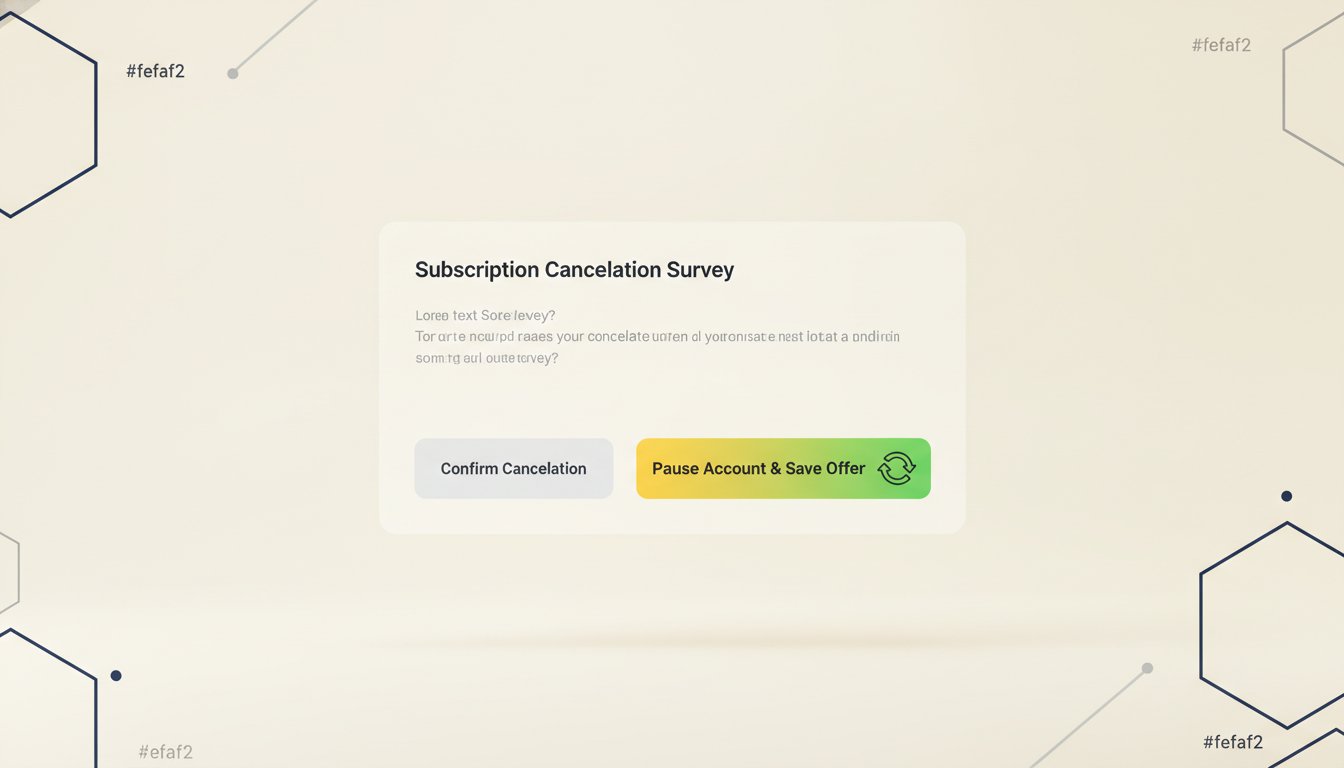
A well-designed cancellation flow can save up to 35% of users who would have otherwise churned. Most SaaS leaders treat the “Cancel” button as a final goodbye, effectively bleeding MRR into a black hole of zero visibility. You’re likely watching subscribers walk away without understanding the “why” behind the exit; you’re missing the critical window to intervene. Deploying sophisticated subscription exit survey software changes this dynamic immediately. It shifts your posture from passive observer to active recovery specialist. It’s time to stop guessing and start optimizing your retention strategy with surgical precision.
You’ll learn how to leverage advanced exit survey software to capture actionable feedback, trigger dynamic save offers, and systematically reduce subscriber churn. We’ll demonstrate how to build an automated feedback loop that directly informs your product roadmap while recovering revenue through personalized incentives at the point of exit. This guide explores the mechanisms of AI-driven analysis and seamless billing stack integrations that transform the point of cancellation into a high-yield retention channel. Stop letting revenue walk out the door and start mastering the science of the save.
Key Takeaways
- Shift your retention strategy from passive data collection to active revenue recovery by treating every cancellation attempt as a strategic intervention point.
- Deploy advanced subscription exit survey software to bridge the gap between raw feedback and immediate “save” offers through deep billing stack integration.
- Replace low-converting static forms with AI-driven cancellation flows that analyze qualitative reasons for leaving to trigger the most effective retention incentives.
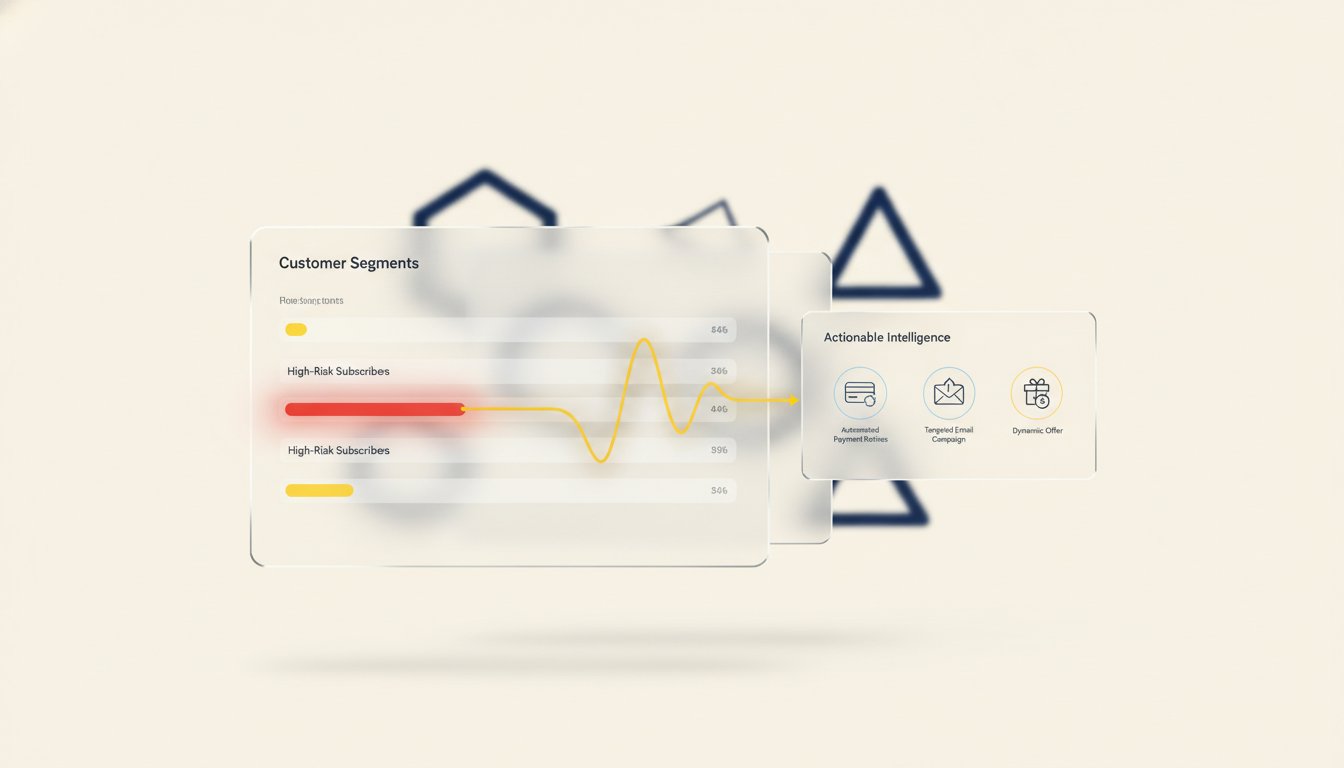
- Optimize your ROI by implementing conditional survey logic that segments at-risk subscribers and presents personalized alternatives based on their specific usage history.
- Leverage automated customer portals to turn exit insights into a systematic feedback loop that informs your product roadmap and prevents future churn.
Beyond the Goodbye: Why Passive Exit Surveys Fail in 2026
Passive surveys are dead. In 2026, a static email sent three days after a user hits “Cancel” is a post-mortem, not a strategy. Modern subscription exit survey software functions as a real-time revenue protection mechanism. It captures the user’s intent at the exact moment of friction; it allows you to intervene before the billing cycle terminates. The median monthly B2B SaaS churn rate sits at 3.5%. If you aren’t analyzing why that 3.5% is leaving, you’re operating in the dark. You’re effectively bleeding MRR into a black hole of zero visibility.
The global subscription economy is projected to grow to $738.82 billion in 2026. This scale demands automation. You can’t rely on manual feedback analysis that never leads to product changes. You need a system that categorizes every “exit” into a strategic data point. High-performance software identifies the leak and provides the exact tool to plug it. It’s about movement, recovery, and optimization. It’s about moving beyond the “Goodbye” and into the “Save.”
The High Cost of the “Black Box” Cancellation
Losing MRR is painful. Losing it without knowing why is catastrophic. Voluntary churn accounts for roughly 2.6% of median monthly churn in the SaaS sector. When a subscriber leaves through a “black box” process, you lose more than revenue; you lose the product intelligence required to prevent the next departure. Manual analysis is too slow for 2026. It’s time-consuming. It’s prone to bias. High-performance teams use exit surveys to generate actionable churn data. This data identifies specific product friction points or pricing misalignments. It transforms a loss into a roadmap for optimization, ensuring your product evolves alongside user expectations.
Feedback vs. Retention: The Strategic Divide
Traditional survey tools were designed for researchers. They weren’t built for revenue recovery. There is a fundamental difference between collecting feedback and executing a retention intervention. This distinction is best understood through the Exit, Voice, and Loyalty framework. When a customer is dissatisfied, they choose between exiting or using their voice. Passive surveys capture the voice after the exit has occurred. Modern subscription exit survey software captures the voice to prevent the exit.
Timing is your most powerful lever. An in-app trigger during the cancellation session is significantly more effective than a post-cancel email. It allows you to present dynamic offers based on the feedback provided. To understand how to structure these interactions, consult The Definitive Guide to Automated Cancellation Flows. In 2026, your cancellation flow should be an AI-integrated system that processes qualitative feedback in milliseconds. It turns a “Goodbye” into a “Wait, let’s fix this.” It moves your business from a state of reactive loss to proactive recovery.
The Anatomy of High-Performance Subscription Exit Survey Software
High-performance subscription exit survey software is built on a four-pillar architecture: Trigger, Survey, Logic, and Action. It’s not a standalone tool. It’s an integrated layer of your billing stack. Deep integration with engines like Stripe is mandatory. This allows the system to pull subscriber data instantly, ensuring the experience is relevant to that specific user’s history. Without this connection, your survey is just another generic form that users will ignore.
Multi-channel delivery is essential for 2026. Whether a user cancels via a web dashboard, a mobile app, or a link in an email, the survey must be native and responsive. Fragmented experiences lead to drop-offs. You need a unified system that captures data regardless of the platform. This technical cohesion ensures that you never miss an opportunity to engage a departing subscriber at the exact moment they decide to leave.
Real-Time Data Integration and Segmentation
Effective retention starts with customer segmentation. You shouldn’t ask a high-LTV power user the same questions as a trial user who never logged in. Segmentation allows you to tailor the survey logic to the user’s specific lifecycle stage. This is critical as businesses face the dangers of subscription fatigue, where users are increasingly sensitive to generic, irrelevant interactions. Your software must recognize who is leaving to determine how to keep them.
Capturing “Exit Intent” before the final click is the hallmark of sophisticated software. By syncing this data with your CRM and product analytics, you create a comprehensive view of why users churn. It’s about movement. You aren’t just watching them leave; you’re gathering the intelligence required to win them back. You can start building your first automated flow to see this data integration in action.
The Logic Engine: Mapping Answers to Outcomes
The logic engine is the brain of the operation. It routes users based on their specific friction points. If a user selects “Too expensive,” the engine should immediately pivot to a discount or a lower-tier plan. If they select “Missing features,” it might trigger a demo request or an educational video. This systematic approach ensures that every save attempt is logical, personalized, and highly likely to succeed.
This is where the transition to dynamic offers happens. It’s a seamless handoff from feedback to incentive. Logic Routing is the automated process of directing a cancelling subscriber toward a specific retention outcome based on their real-time survey input. By mapping specific answers to high-value outcomes, you transform a simple questionnaire into a powerful engine for revenue recovery.
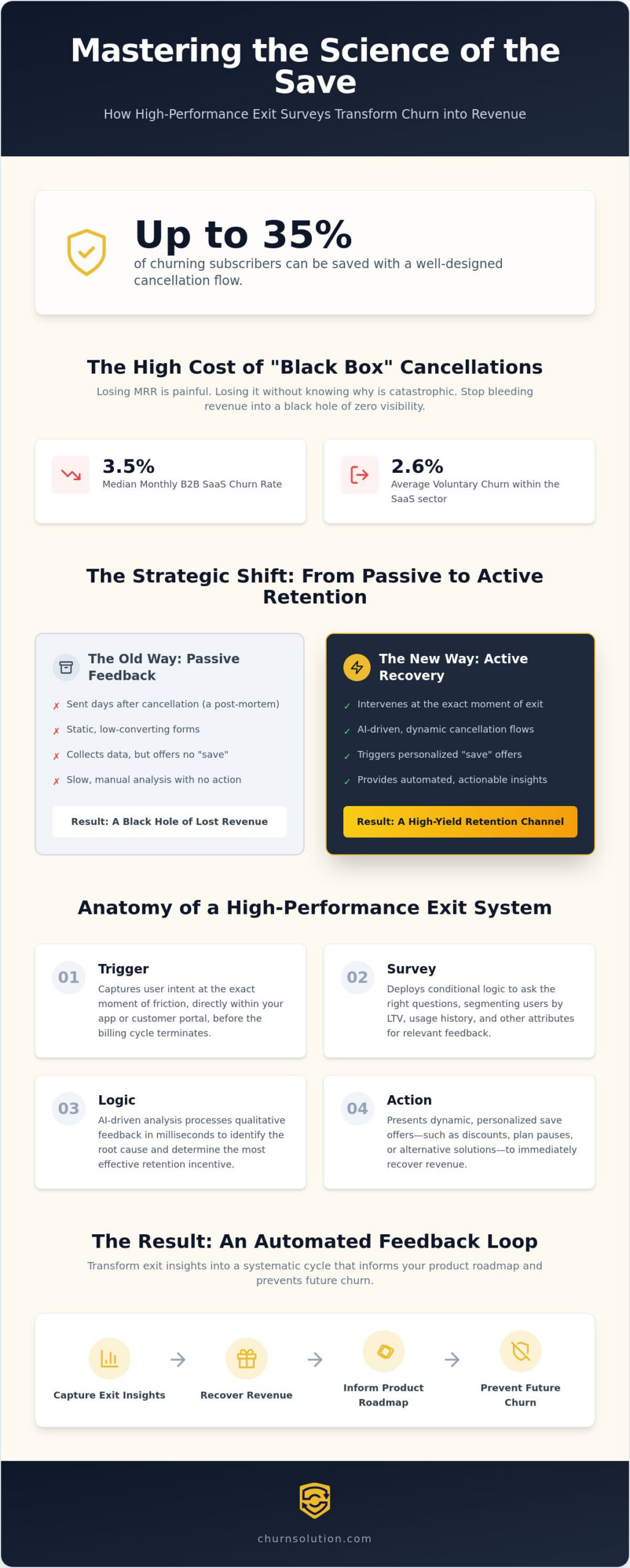
Static Forms vs. AI-Driven Cancellation Flows: A Performance Comparison
Static forms are relics. They exist as friction points that customers bypass, leading to a total loss of intelligence. When you deploy native, integrated subscription exit survey software, you aren’t just asking questions; you’re creating a high-performance interaction. Research indicates that a well-designed cancellation flow can save 15% to 35% of users who intended to cancel. Generic forms simply can’t compete with that recovery rate. They lack the technical agility to respond to user input in real time. They offer a dead end, whereas AI-driven flows offer a pivot.
The performance gap is measurable. Native flows see significantly higher response rates because they feel like a cohesive part of the user experience. You aren’t redirecting the user to a third-party site or a clunky pop-up. You’re maintaining the brand’s authoritative presence through the entire exit event. This continuity builds trust, making the subscriber more likely to provide honest feedback and, eventually, accept a save offer. Moving from static to dynamic isn’t an upgrade; it’s a fundamental shift in how you protect your MRR.
The AI Advantage in Feedback Analysis
Qualitative feedback is notoriously difficult to scale. Reading through thousands of “Other” comments is a manual, time-consuming process that rarely leads to product changes. High-performance software utilizes AI feedback analysis to categorize sentiment and identify emerging trends instantly. It turns raw text into quantitative roadmap priorities. This automated processing is backed by academic research on churn prediction, which emphasizes the necessity of understanding customer behavior to prevent departures. By integrating these insights into your churn metrics, you gain a clear view of why users leave and what features will keep them. You stop guessing and start building based on data.
A/B Testing Your Exit Strategy
Optimization is an iterative process. You don’t just set a survey and forget it. You must test different survey lengths, question types, and offer timings to find the highest-performing “Save” configuration. Using A/B experiments allows you to pit a 20% discount against a “pause subscription” option to see which resonates more with specific segments. Every test refines your retention engine. It ensures you’re presenting the most compelling incentive at the exact moment of exit. For a deeper dive into these strategies, consult Customer Churn Analysis: The 2026 Guide. Constant testing is the only way to maintain a competitive edge in an economy where 78% of adults hold at least one paid subscription and are increasingly selective about their spending.
Strategic Implementation: Optimizing Your Exit Survey for Maximum ROI
Maximizing the ROI of your subscription exit survey software requires more than technical installation; it demands a tactical framework. You must move from merely asking questions to executing a structured recovery sequence. Follow this four-step implementation process to transform churn data into a high-yield retention channel. First, identify high-risk segments in your subscriber base. Focus your most aggressive save offers on high-LTV users who have demonstrated consistent product engagement. Second, design conditional survey logic that feels helpful. If a user cites “financial constraints,” the flow should pivot to a discount or a plan downgrade rather than a feature tutorial. This ensures the interaction remains relevant to the user’s specific friction point.
Third, deploy targeted interventions. Options like account pauses, temporary discounts, or credit extensions are your primary recovery tools. These interventions must be triggered automatically based on the survey response to ensure the “save” happens in real time. Finally, close the loop. Notify your product and customer success teams of critical feedback immediately. If multiple high-value users report a specific bug, your engineering team needs that data in their sprint planning. This systematic approach ensures that every cancellation attempt either recovers revenue or provides the intelligence needed to prevent future churn.
Designing the “Perfect” Survey Question Set
Your question set must balance speed with depth. A long, complex form will be ignored; a single question might miss the root cause. Start with a “Value-First” approach. Ask the user what they liked most about the service before asking why they’re leaving. This subtle psychological shift reminds the subscriber of the product’s utility right before they make the final decision. Use exit surveys to distinguish between “saveable” customers and those who are a poor product fit. Saveable customers are often leaving due to temporary issues like price or a missing secondary feature. By identifying these individuals, you can focus your retention resources where they have the highest probability of success.
Automating the Win-Back Transition
The relationship doesn’t end if the user completes the cancellation. You must trigger automated reactivation campaigns that reference the specific feedback provided during the exit flow. If a user left due to a missing feature, notify them the moment that feature launches. Additionally, integrate your survey data into your dunning and payment recovery efforts. Understanding why a user is frustrated helps you tailor your dunning emails to be more empathetic and effective. Connecting exit data directly to win-back automation increases the probability of recovery by ensuring every communication is contextually relevant to the subscriber’s specific reason for leaving. Deploy your automated retention flow today to start capturing this critical intelligence.
Executing Your Retention Strategy with Churn Solution
Churn Solution is the authoritative choice for SaaS leaders who refuse to accept churn as a fixed cost of doing business. It’s a platform-agnostic specialist designed to protect your revenue without requiring a total overhaul of your billing engine. Unlike generic billing modules that offer basic retention as an afterthought, this software provides a sophisticated, data-driven layer of intervention. You gain the ability to deploy native subscription exit survey software that communicates directly with your existing stack. This technical mastery ensures that every data point captured during a cancellation session is used to optimize future retention efforts. It moves your business from a state of reactive loss to proactive recovery.
The synergy between feedback and action is most evident when you integrate your survey logic with smart retries and dunning automation. If a subscriber indicates financial friction, the system adjusts its recovery posture accordingly. You can also empower users through sophisticated customer portals. These portals provide a seamless, self-service experience that allows for pauses or plan downgrades before the final exit click. It’s about maintaining control over the customer lifecycle through every possible friction point. You aren’t just letting them leave; you’re providing a structured environment where they can choose to stay.
Why Specialized Retention Software Beats “DIY”
Building custom cancellation flows in-house is a maintenance trap that drains engineering resources. You’re forced to update logic, manage integrations, and analyze data manually. Specialized software eliminates this overhead. You get immediate access to cross-industry benchmarks and proven retention templates that have been optimized for high-performance recovery. This expertise is a force multiplier for your growth team. To understand the full scope of this technological advantage, read Subscription Revenue Protection: The 2026 Guide. Stop wasting development cycles on internal tools that lack the intelligence of a dedicated specialist. Focus your team on your core product while we focus on your revenue protection.
Get Started: From Churn to Growth
Implementation shouldn’t take months. You can deploy Churn Solution and start recovering revenue in under 30 minutes. The impact on your Net Revenue Retention (NRR) is immediate. By transforming the point of cancellation into a revenue recovery channel, you’re not just stopping losses; you’re creating a foundation for sustainable growth. Don’t let another billing cycle pass without visibility into why your subscribers are leaving. Take control of your business health today. Start your trial now and see how sophisticated automation turns your churn metrics around. Every hour you wait is revenue that could have been saved.
Master Your Retention Engine
Passive feedback is a liability in a high-growth subscription business. You’ve seen how subscription exit survey software functions as a real-time revenue protection layer; it bridges the gap between raw intent and strategic recovery. By replacing static forms with AI-driven flows, you gain the technical agility to respond to friction points before the billing cycle terminates. This transition from observation to intervention is the only way to protect your MRR in 2026. High-performance teams don’t leave their retention to chance. They build systems that act when the stakes are highest.
The infrastructure for recovery is already at your fingertips. You can recover up to 30% of cancellations automatically through personalized save logic and dynamic incentives. With AI-powered feedback analysis included and seamless Stripe and Braintree integration, the path to improved Net Revenue Retention is direct and measurable. Stop watching your subscribers walk away and start optimizing every exit event for maximum ROI. You’re now equipped to turn every departure into a data-driven opportunity for growth.
Stop the Bleed: Deploy Your Automated Cancellation Flow with Churn Solution
Frequently Asked Questions
What is the best way to ask for feedback when a customer cancels?
Native, in-app cancellation flows provide the most reliable feedback loop because they engage the user before the relationship is terminated. Post-exit emails suffer from low engagement and delayed data. By capturing sentiment during the session, you gain immediate product intelligence that can be used to trigger a save offer or inform your long-term product roadmap.
Can exit survey software actually stop a customer from leaving?
Yes, high-performance subscription exit survey software can save between 15% and 35% of users who intend to cancel. It achieves this by mapping specific survey answers to dynamic offers like account pauses or temporary discounts. By addressing the friction point in real time, the software provides a logical reason for the subscriber to remain active and continue their billing cycle.
How many questions should a subscription exit survey have?
Limit your survey to a single categorization question followed by an optional qualitative field for maximum completion rates. High-friction surveys with multiple pages or complex logic often cause users to abandon the process entirely. A streamlined interaction ensures you capture the “why” behind the exit without further damaging the customer relationship or losing the data point.
Should I offer a discount in my cancellation flow?
Reserve discounts specifically for users who identify price as their primary reason for leaving. Offering a blanket discount to every departing subscriber devalues your product and creates a “race to the bottom” for your ARPU. Use conditional logic to present the right incentive, such as a temporary pause or a plan downgrade, based on the specific friction point identified.
How does AI help in analyzing customer exit surveys?
AI automates the synthesis of qualitative feedback by identifying recurring sentiment and specific feature requests within open-ended comments. It transforms thousands of individual data points into a prioritized list of product improvements. This technical layer allows you to scale your feedback loop without the manual burden of reading every response, ensuring your roadmap is driven by objective user data.
What is the difference between voluntary and involuntary churn?
Voluntary churn is an active decision made by a user to cancel their subscription, whereas involuntary churn is a passive failure caused by payment issues like expired cards or network declines. While subscription exit survey software addresses the behavioral reasons for leaving, automated tools like smart retries and dunning campaigns focus on recovering revenue lost to technical billing failures.
Can I integrate exit survey software with major billing engines like Stripe or Braintree?
Deep integration with billing engines like Stripe or Braintree is essential for a high-performance recovery strategy. This technical connection enables the software to pull historical subscriber data and apply dynamic save offers directly to the account without manual intervention. Without this seamless link, your cancellation flow operates in a vacuum, lacking the automation required to protect revenue effectively.
How do I measure the success of my exit survey strategy?
Success is measured through your save rate and the long-term impact on Net Revenue Retention (NRR). Track the percentage of users who accept a retention offer and remain active for at least three billing cycles. Additionally, monitor how often qualitative feedback leads to product changes that reduce churn across your entire subscriber base to ensure long-term stability.
- Key Takeaways
- Table of Contents
- Beyond the Goodbye: Why Passive Exit Surveys Fail in 2026
- The Anatomy of High-Performance Subscription Exit Survey Software
- Static Forms vs. AI-Driven Cancellation Flows: A Performance Comparison
- Strategic Implementation: Optimizing Your Exit Survey for Maximum ROI
- Executing Your Retention Strategy with Churn Solution
- Master Your Retention Engine
- Frequently Asked Questions

Churn solution that turns your customers right around.
Related Articles
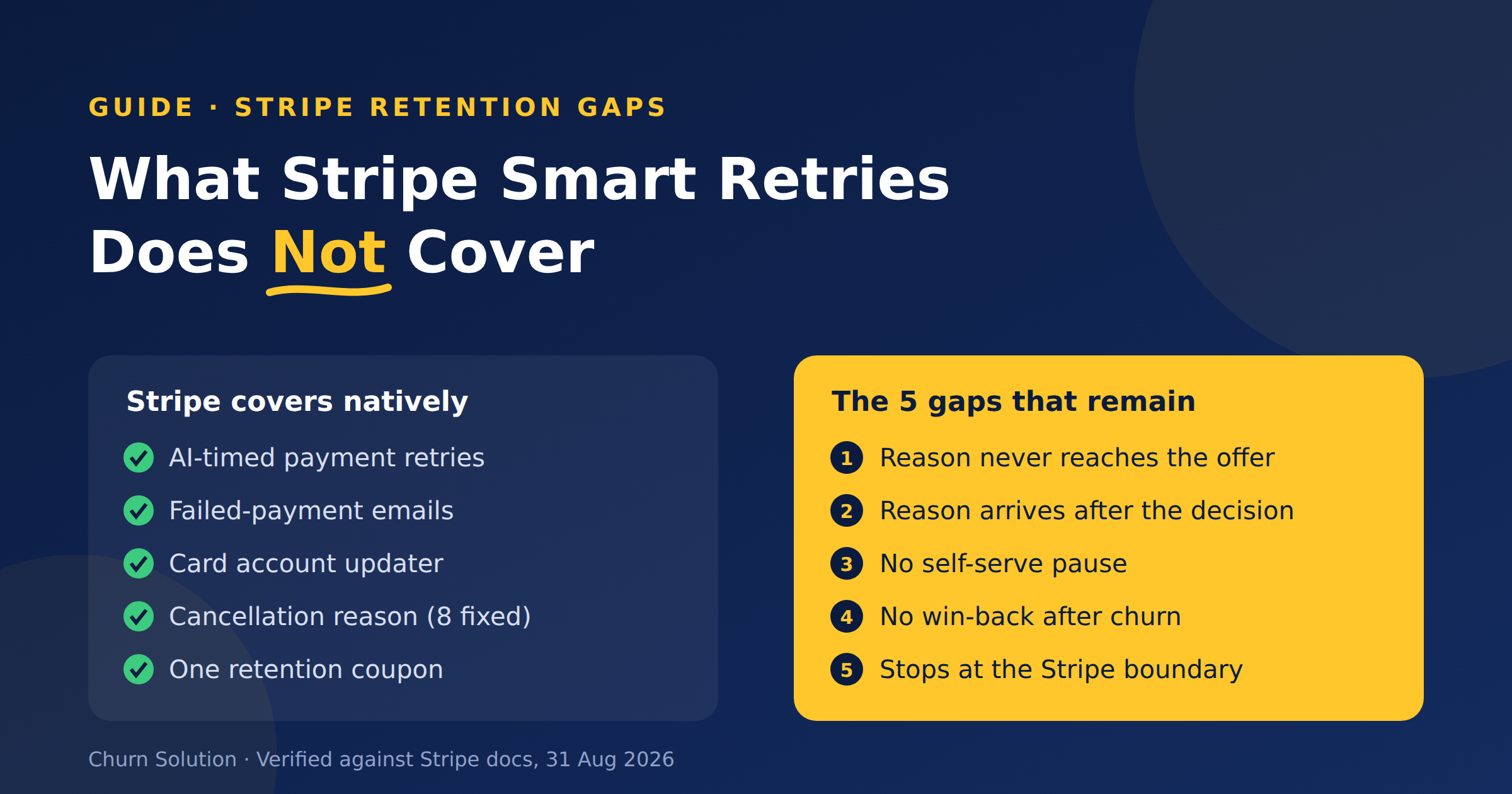
What Stripe Smart Retries Does Not Cover
Stripe Smart Retries recovers failed payments but doesn't run retention. Here are the five gaps that remain, sourced from Stripe's...

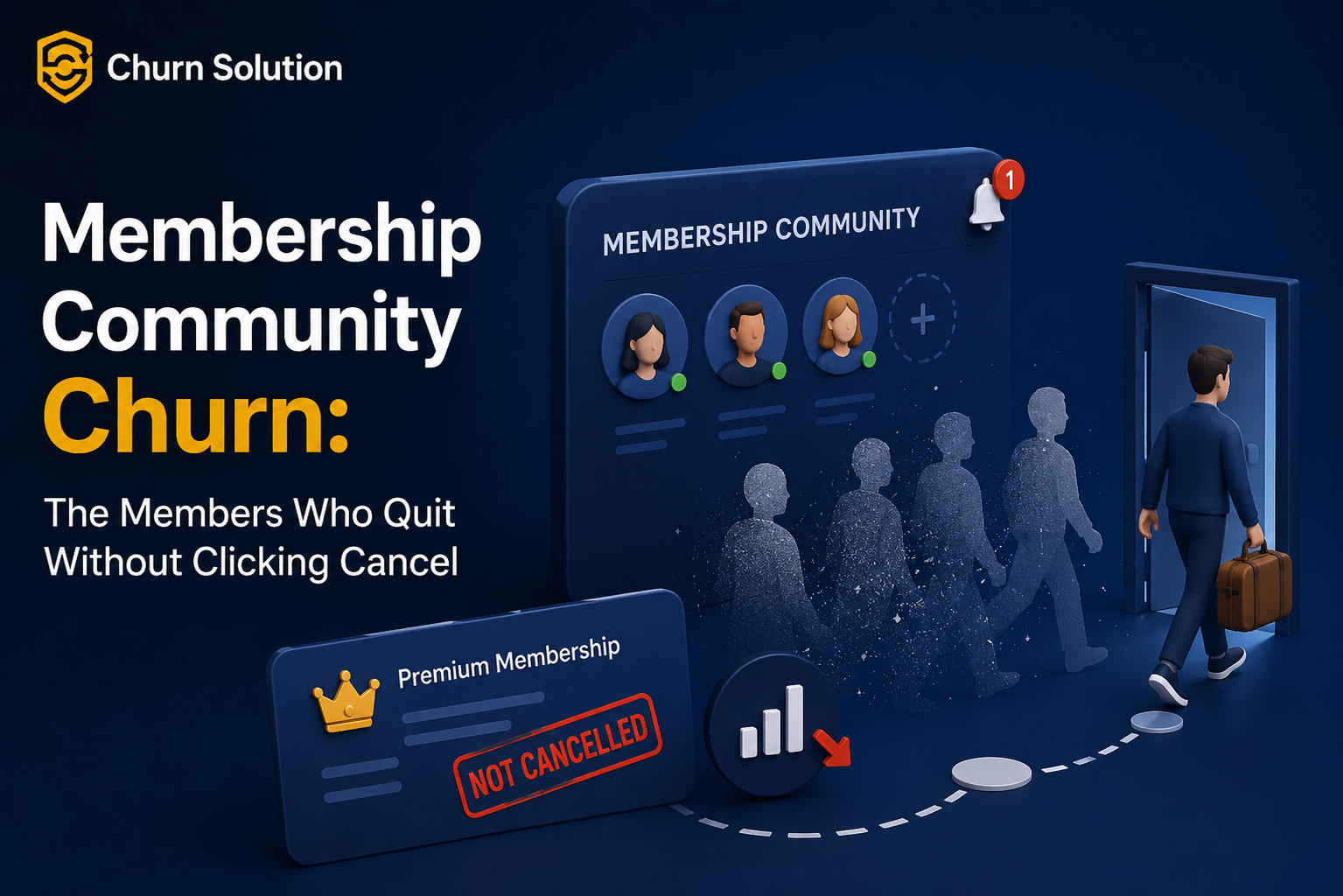
Membership Community Churn: The Members Who Quit Without Clicking Cancel
Quiet churn is the real leak: members who never clicked “cancel” at all. A card expires. A bank declines a...

Subscription Churn Dashboard: The 2026 Guide to Actionable Revenue Intelligence
Up to 40% of subscription churn is involuntary, meaning your customers aren't choosing to leave; they're being forced out by...