ARTICLE
What is Customer Retention Management Software? The 2026 Guide to Protecting Revenue

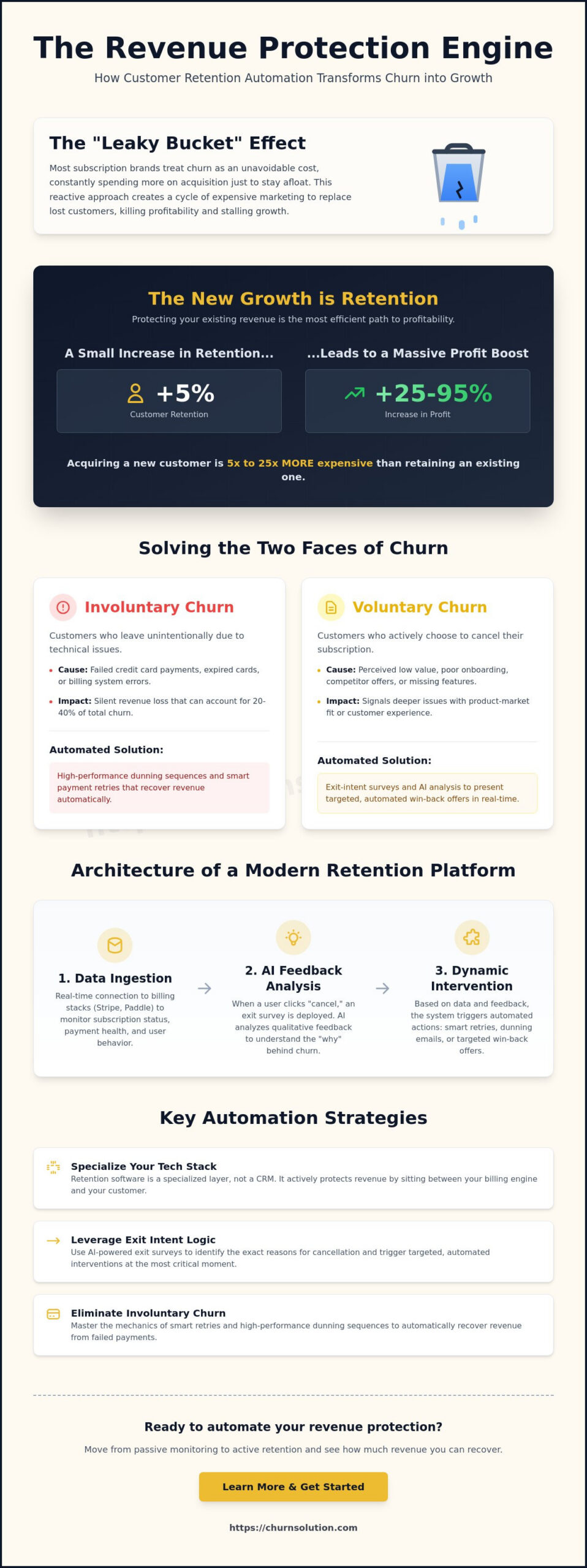
A 5% increase in customer retention can lead to a 25-95% increase in profits, yet most subscription brands still treat churn as an inevitable cost of doing business. You likely recognize the frustration of watching hard-won revenue evaporate because of failed credit cards or silent departures. Manual win-back processes are slow and lack the visibility needed to stop the bleed. Implementing sophisticated customer retention automation is the only way to scale your revenue protection without scaling your headcount.
Protecting your bottom line requires a shift from reactive troubleshooting to proactive intervention. This guide demonstrates how modern retention software moves beyond passive monitoring to secure the customer lifecycle. You’ll learn to automate the save process, recover failed payments via smart retries, and transform exit surveys into a strategic advantage. We will break down the specific mechanisms, from dunning automation to AI feedback analysis, that stabilize your Net Revenue Retention and convert high-risk cancellations into measurable growth opportunities.
Key Takeaways
- Understand why retention software serves as a specialized technology layer between your billing engine and your customer to actively protect existing revenue.
- Discover how exit intent logic and AI feedback analysis identify the specific reasons for cancellation, allowing for targeted, automated interventions.
- Master the mechanics of customer retention automation to eliminate involuntary churn through smart retries and high-performance dunning sequences.
- Identify the critical integration requirements for your billing stack to ensure real-time visibility into churn metrics and revenue recovery performance.
- Learn a phased implementation strategy that moves from passive data collection via exit surveys to active, automated win-back campaigns.
What is Customer Retention Management Software?
Customer retention management software isn’t just a suite of tools for customer support. It is a specialized technology layer designed specifically for subscription businesses to defend their recurring revenue. While acquisition software focuses on the top of the funnel to capture new users, retention software acts as the critical barrier between your existing customer base and the exit door. Leaders in 2026 no longer view churn as a support issue. They treat it as a technical failure that requires automated, high-performance solutions.
This software typically falls into two categories. First, proactive relationship management uses data to identify health scores and engagement levels. Second, reactive automated intervention triggers specific workflows when a customer attempts to cancel or a payment fails. By integrating customer retention automation directly into your billing stack, you transform a passive monitoring process into an active revenue recovery engine. This shift is essential because current market dynamics prioritize capital efficiency and sustainable growth over high-burn acquisition strategies.
The Shift from CRM to Dedicated Retention Tech
Traditional CRMs are often insufficient for high-volume subscription models. They act as static databases of contact information rather than dynamic engines for intervention. High-growth brands need real-time data ingestion to identify at-risk segments before they reach the point of no return. Unlike a standard CRM, dedicated retention platforms monitor behavioral signals and payment health to deploy immediate fixes. Retention software serves as the automated guardrail for your MRR.
The core of this technology is the ability to turn data into action. Understanding Customer retention requires more than just tracking dates; it requires a system that can predict and prevent departures. By utilizing real-time churn metrics, these platforms allow teams to move away from manual spreadsheets and toward a scalable, data-driven strategy.
Key Benefits: Why MRR Protection is the New Growth
Profitability in the subscription economy relies on the compounding effect of long-term customers. Data from Ringly.io and the Small Business Expo suggests that a 5% increase in retention can lead to a 25-95% increase in profit. This massive swing occurs because the cost of maintaining an existing customer is significantly lower than the 5 to 25 times higher cost of acquiring a new one. Protecting your Monthly Recurring Revenue (MRR) is the most efficient way to scale.
Strong retention directly impacts Net Revenue Retention (NRR), which is the single most important metric for SaaS valuation in 2026. Companies that fail to address the “leaky bucket” effect find themselves in a cycle of expensive acquisition just to stay flat. Implementing customer retention automation ensures that every dollar spent on marketing contributes to actual growth rather than simply filling holes in a deteriorating customer base. It stabilizes your foundation, allowing for more aggressive and confident expansion.
The Architecture of Modern Retention Platforms
Modern customer retention automation operates as a sophisticated engine built on three core pillars: data ingestion, AI feedback analysis, and dynamic intervention triggers. This isn’t a passive log of user activity. It is a real-time response system that sits between your billing stack and the customer. By automating the interception of at-risk accounts, you remove the delay inherent in manual support processes and secure revenue before it leaves the building.
When a user initiates a cancellation, the architecture triggers an “Exit Intent” logic. This is the most critical micro-moment in the customer lifecycle. Instead of presenting a generic “Confirm Cancellation” button, the system deploys exit surveys to capture the exact friction point. This qualitative data provides the “why” behind the churn, which is often missing from standard analytics. Integrating these technical tools with broader customer retention strategies ensures your business remains resilient against market shifts and competitor pressure.
Data Ingestion and Segmentation
High-performance platforms ingest data directly from billing providers like Stripe or Paddle. This direct connection allows for immediate awareness of subscription status changes or payment failures. By utilizing customer segmentation, the system categorizes users based on lifetime value, plan type, or usage patterns. This ensures that a high-value enterprise account receives a different intervention than a low-tier trial user. Health scores then act as early warning signals, predicting churn events by analyzing engagement drops before the user even considers the cancel button.
Feedback and Sentiment Analysis
Most legacy systems fail because they rely on limited cancellation reasons like “too expensive” or “missing features.” Modern AI feedback analysis uses natural language processing to detect sentiment in open-ended responses. It distinguishes between a “non-saveable” customer, such as a business that has closed, and a “saveable” one who is simply frustrated with a specific workflow. You can then run A/B experiments to test which specific save messages or dynamic offers effectively stop the departure. This data-driven approach turns raw feedback into an actionable roadmap for product and pricing adjustments.
To see these automated triggers in action and identify your most saveable segments, you can start building your first intervention flow today.
Solving the Two Faces of Churn: Involuntary vs. Voluntary
Subscription churn is not a monolithic problem. It presents two distinct challenges that require different technical interventions. While some customers actively choose to leave, a significant portion of revenue is lost simply because a credit card failed or a billing cycle hit a technical snag. High-performance customer retention automation addresses both by deploying specific recovery mechanisms based on the nature of the churn event. Failing to distinguish between these two categories results in wasted effort and avoidable revenue loss.
| Churn Type | Primary Cause | Automated Solution |
|---|---|---|
| Voluntary | Active cancellation by the user due to price, utility, or competition. | Dynamic offers and personalized save flows. |
| Involuntary | Passive loss due to expired cards, insufficient funds, or bank declines. | Smart retries and automated dunning sequences. |
Automated Dunning and Payment Recovery
Involuntary churn often accounts for up to 30% of total revenue loss. This is purely technical churn. It occurs when a customer wants to keep the service but the transaction fails. Modern payment recovery systems eliminate this friction by utilizing smart retries. Instead of retrying a card at random intervals, machine learning algorithms analyze historical data to attempt the charge when it is most likely to succeed, such as on typical paydays or specific times of day. This happens in the background, recovering revenue without requiring any action from the customer. If you’re evaluating whether your current billing processor is sufficient for this task, the detailed breakdown in Stripe recovery vs Churn Solution illustrates exactly where native processor retries fall short of a dedicated retention engine.
When retries fail, a high-converting dunning email sequence takes over. These are not generic “payment failed” notifications. They are strategic, branded communications that provide a direct, frictionless path for the user to update their billing information. By automating this cycle, you stop the bleed of technical churn and maintain a seamless user experience.
The Save Flow: Converting Cancellations into Stays
Voluntary churn requires a more psychological approach. When a user clicks the cancel button, it shouldn’t trigger an immediate account termination. Instead, it should launch a sophisticated save flow. This is a prime opportunity for a reactivation campaign before the user even leaves. By presenting dynamic offers tailored to the user’s specific cancellation reason, you can often flip the decision.
Effective save flows use alternatives to cancellation such as account pauses, temporary discounts, or plan downgrades. These options allow the customer to stay within your ecosystem while they resolve their specific pain point. For a deeper look at the technical setup of these systems, see The Definitive Guide to Automated Cancellation Flows in 2026. Implementing customer retention automation at this stage ensures that your team isn’t manually negotiating every departure; the system does the work for you at scale.
Evaluating Retention Software: A Checklist for 2026
Selecting a platform for customer retention automation is a high-stakes technical decision. You aren’t just buying a survey tool; you are installing a revenue protection layer that must communicate perfectly with your source of truth. If the software cannot sync in real-time with your billing engine, it will fail to trigger the right interventions at the right moments. Lean SaaS teams in 2026 require a “set and forget” architecture that handles the complexity of global subscription logic without constant manual oversight.
Your evaluation should prioritize the following core capabilities:
- Native Billing Integration: The software must offer deep, bi-directional sync with providers like Stripe, Braintree, or Paddle.
- Real-Time Analytics: Access to granular churn metrics and reporting dashboards is non-negotiable for tracking recovery performance.
- Self-Service Infrastructure: A low-code customer portal allows users to manage their own subscription status, reducing support tickets and providing a natural environment for save offers.
- Automated Win-Back Triggers: The system should automatically identify and target lapsed subscribers with personalized reactivation campaigns based on their previous exit data.
Technical Integration and Scalability
Lean teams cannot afford a six-month implementation cycle. You must evaluate the Time to Value (TTV) of any platform. A high-performance tool should be operational within days, not weeks. Beyond speed, data security is paramount. Ensure any vendor maintains SOC2 compliance and adheres to the latest data privacy regulations, such as the 2026 updates to the CCPA and the California Delete Act. A secure, scalable foundation ensures that your revenue protection doesn’t become a legal or technical liability as you grow.
Measuring ROI: Beyond the Save Rate
Don’t fall into the trap of only measuring the raw save rate. True ROI is calculated by the “Saved Revenue vs. Cost of Offer” ratio. If you save a customer by offering a 90% discount, you may be preserving a user but destroying your margins. High-end platforms track the long-term LTV of saved customers to ensure you are retaining high-quality revenue. For a comprehensive framework on these calculations, read Subscription Revenue Protection: The 2026 Guide to Automated Retention.
Implementing customer retention automation is a permanent structural upgrade to your business health. To see how these technical requirements translate into recovered MRR, start your technical evaluation with a free trial.
Implementation: Moving from Monitoring to Mastery
Transitioning from manual churn management to a fully automated revenue protection ecosystem is a strategic imperative for high-growth SaaS. Mastery of customer retention automation requires a phased approach that balances immediate revenue recovery with long-term data collection. You cannot fix what you do not measure; therefore, the first step is always the implementation of a passive save flow. By deploying exit surveys, you establish a baseline of qualitative data that informs every subsequent intervention. This initial phase provides the visibility needed to understand why customers are leaving before you attempt to stop them.
Once your data layer is active, you must layer in active recovery mechanisms to stop immediate revenue leaks. This involves deploying payment recovery protocols and smart retries. These tools work silently in the background to resolve the technical failures that plague subscription billing. The final stage of mastery involves dynamic intervention. By using A/B experiments, you can refine your dynamic offers to ensure you are presenting the right incentive to the right customer at the exact moment of exit intent. The ultimate goal is a self-optimizing system that protects your bottom line without human intervention.
The 30-Day Retention Roadmap
Success requires a structured timeline to ensure technical stability and measurable results. Follow this roadmap to secure your MRR:
- Week 1: Audit and Integration. Connect your primary billing sources and audit your historical churn reasons. Identify the exact percentage of revenue lost to involuntary payment failures versus active cancellations.
- Week 2: Launch the Save Flow. Deploy your first automated cancellation flow. Replace the generic “Confirm Cancellation” button with a survey that captures intent and presents a relevant save offer.
- Week 3: Monitor and Reactivate. Analyze the initial save rates and deploy automated reactivation sequences for customers who chose to leave despite the save offer.
Why Churn Solution is the Logical Choice
Churn Solution is built specifically for the “Save” moment. We don’t offer generic support tools; we provide a high-performance intervention layer designed to recover revenue at scale. Our platform focuses on customer retention automation that delivers measurable ROI by identifying and fixing the specific leaks in your subscription lifecycle. We transform the point of cancellation from a dead end into a growth opportunity through sophisticated data ingestion and AI-driven feedback analysis.
Secure Your Revenue Foundation for 2026
Securing your revenue foundation requires more than just monitoring metrics; it demands a proactive, automated intervention layer. You’ve seen how modern platforms transform the cancel button into a strategic save moment by addressing both technical payment failures and active customer departures. Implementing customer retention automation is the most efficient way to protect your MRR and improve your valuation in a competitive market. It’s the difference between passive observation and active revenue protection.
Our platform provides the specialized tools needed for this transition. With direct Stripe and Paddle integrations and SOC2 compliant data handling, you can deploy high-performance save flows with complete security. Churn Solution’s AI-driven feedback analysis turns raw survey data into an actionable roadmap for product optimization. It’s time to stop the bleed and start scaling with a stable, protected customer base. Use the tools that turn departures into data and lost revenue into growth.
Start recovering your lost revenue today with Churn Solution. Your bottom line will thank you.
Frequently Asked Questions
What is the difference between a CRM and customer retention software?
A CRM acts as a static database for managing general customer relationships and sales history. Retention software is an active intervention engine designed specifically to protect recurring revenue. While your CRM tracks who your customers are, retention tech triggers automated actions like cancellation flows and dunning sequences to stop revenue from leaving. It functions as a technical layer between your billing stack and the user to secure the subscription lifecycle.
Can customer retention management software reduce involuntary churn?
Yes, it is the primary tool for eliminating technical churn caused by failed payments. The software uses smart retries and automated dunning sequences to recover revenue that would otherwise be lost to expired or declined credit cards. By deploying customer retention automation, you can recover approximately 30% of churn that is purely technical and requires no manual intervention from your support team.
How does automated dunning management work?
Automated dunning manages the communication cycle immediately following a failed transaction. The system initiates a sequence of strategic, branded emails that provide a direct, frictionless path for the user to update their billing information. This removes the need for manual outreach and ensures consistent follow-up until the payment is secured. It effectively bridges the gap between a declined card and a successful recovery without bothering the customer.
Is it better to offer a discount or a pause during a cancellation flow?
The optimal choice depends entirely on the specific cancellation reason identified through your exit surveys. Pauses are highly effective for users facing temporary utility issues or seasonal needs. Discounts are better suited for addressing direct price sensitivity. You should use A/B experiments to test both options against different customer segments to confirm which offer maximizes long-term lifetime value rather than just providing a short-term save.
What metrics should I track to measure the success of my retention software?
You must prioritize Net Revenue Retention (NRR), Saved Revenue, and the recovery rate of failed payments. Tracking the long-term LTV of saved customers is also critical to ensure your offers are maintaining quality revenue. High-performance customer retention automation aggregates these metrics into real-time dashboards. This allows you to see the direct impact of your intervention strategies on your bottom line without manually calculating spreadsheets.
Does retention software work for mobile app subscriptions?
Retention software works for mobile apps as long as the platform integrates with your billing engine or app store payment processor. It allows you to deploy the same sophisticated logic used in web apps, such as exit surveys and win-back campaigns. For a deeper technical framework on addressing the unique structural challenges of mobile, see our guide on churn prevention for apps. This ensures a consistent revenue protection strategy across all user platforms. It stabilizes your mobile subscription revenue by providing users with self-service options to manage their accounts.
How long does it take to see results from retention automation?
Results in payment recovery are typically visible within the first billing cycle. Involuntary churn reduction begins the moment your smart retries and dunning sequences are active. For voluntary churn, you will see initial data from exit surveys immediately. However, it usually takes about 30 days to collect enough feedback to optimize your save offers and see a stabilized increase in your overall retention rate.
Will using retention software annoy my customers who want to leave?
No, it actually improves the customer experience by providing a frictionless self-service path for account management. By offering relevant alternatives like account pauses or plan downgrades, you demonstrate that you understand their specific needs. Most users appreciate having options that allow them to stay within your ecosystem on their own terms. It transforms a potentially negative exit into a professional, data-driven interaction that respects their intent.
- Key Takeaways
- Table of Contents
- What is Customer Retention Management Software?
- The Architecture of Modern Retention Platforms
- Solving the Two Faces of Churn: Involuntary vs. Voluntary
- Evaluating Retention Software: A Checklist for 2026
- Implementation: Moving from Monitoring to Mastery
- Secure Your Revenue Foundation for 2026
- Frequently Asked Questions

Churn solution that turns your customers right around.
Related Articles
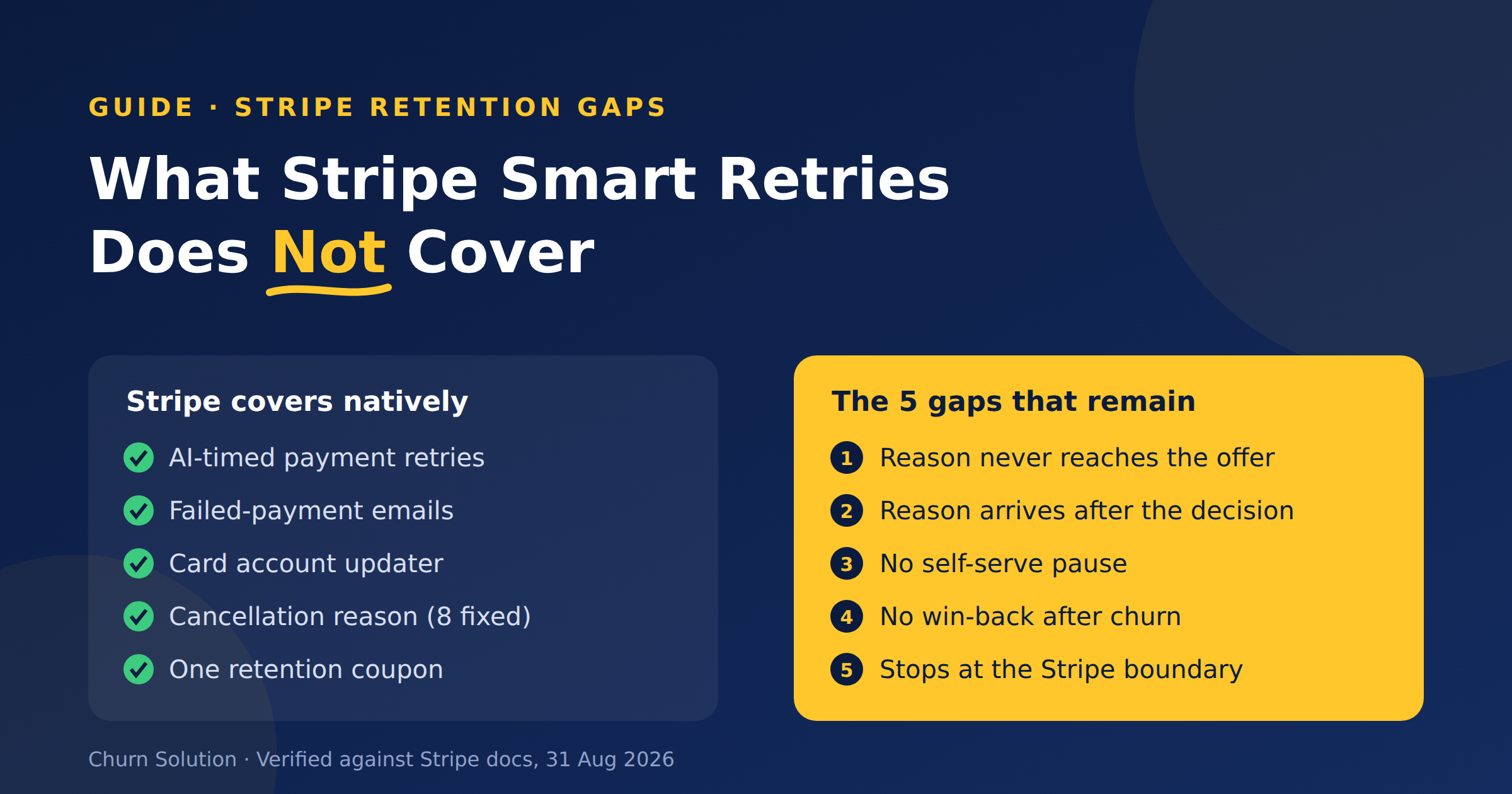
What Stripe Smart Retries Does Not Cover
Stripe Smart Retries recovers failed payments but doesn't run retention. Here are the five gaps that remain, sourced from Stripe's...

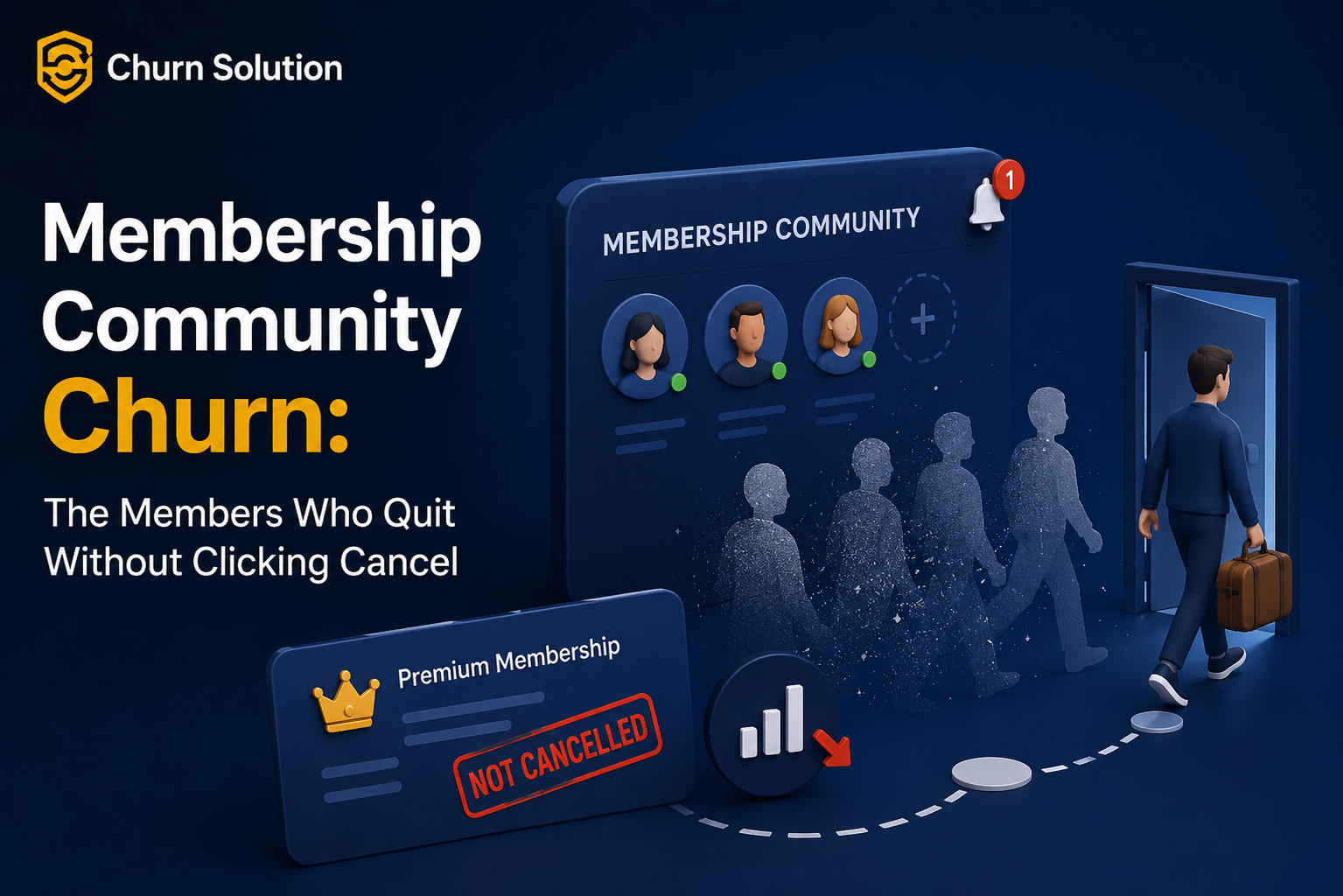
Membership Community Churn: The Members Who Quit Without Clicking Cancel
Quiet churn is the real leak: members who never clicked “cancel” at all. A card expires. A bank declines a...

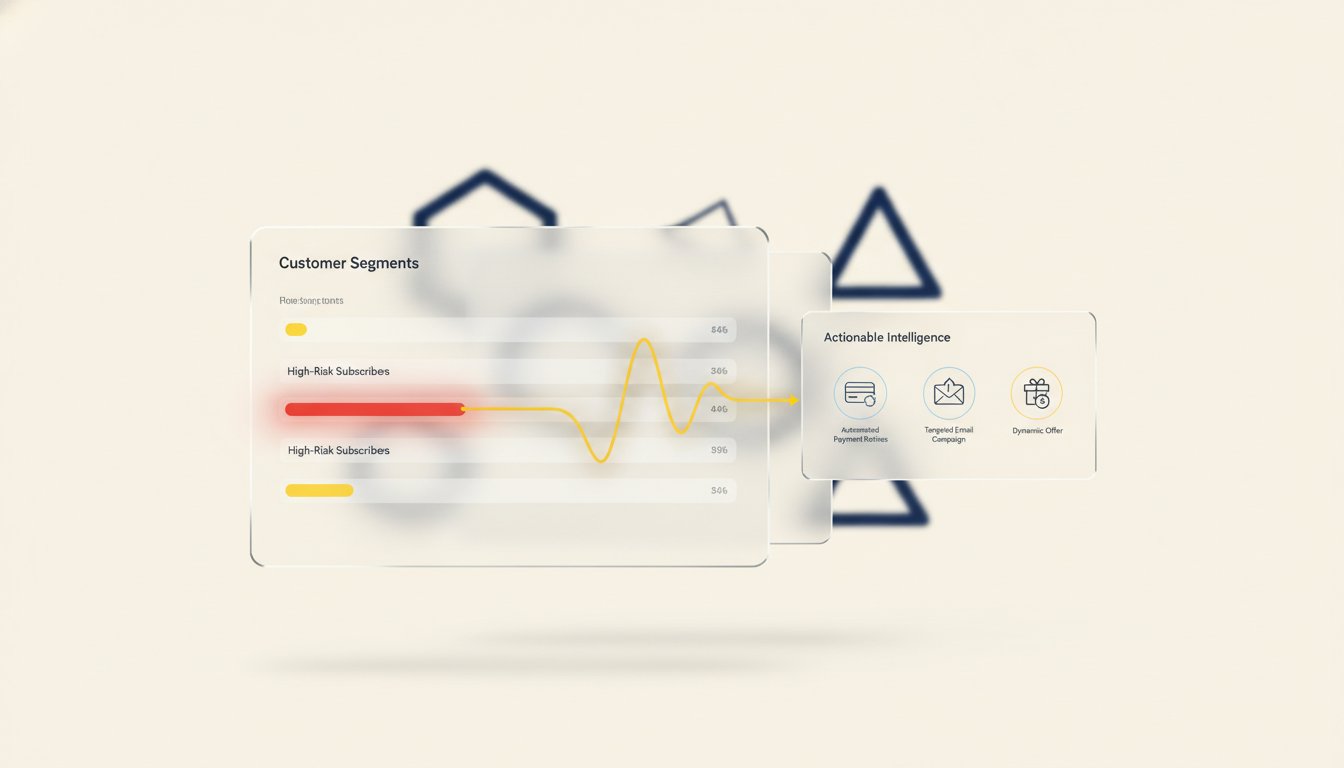
Subscription Churn Dashboard: The 2026 Guide to Actionable Revenue Intelligence
Up to 40% of subscription churn is involuntary, meaning your customers aren't choosing to leave; they're being forced out by...