ARTICLE
How to Reduce Churn Without Discounts: Value-Based Retention Strategies for 2026
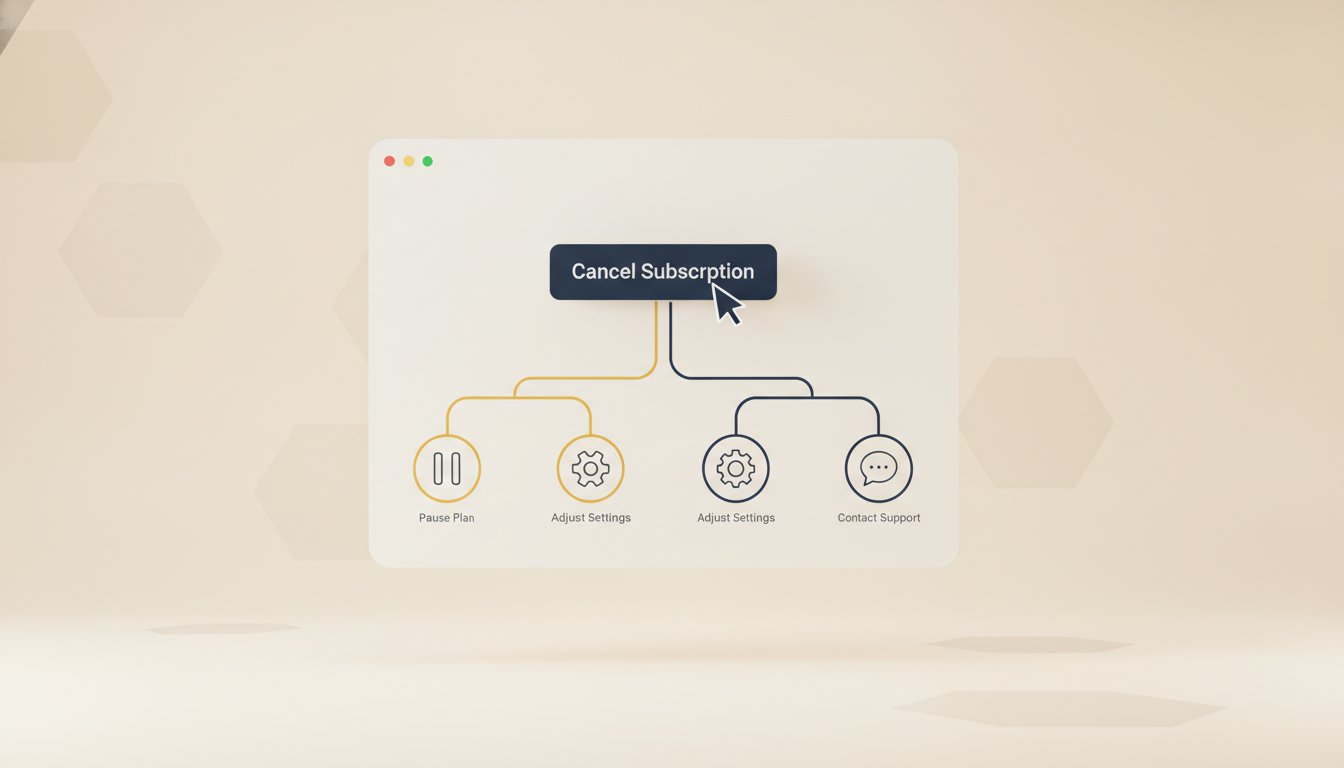
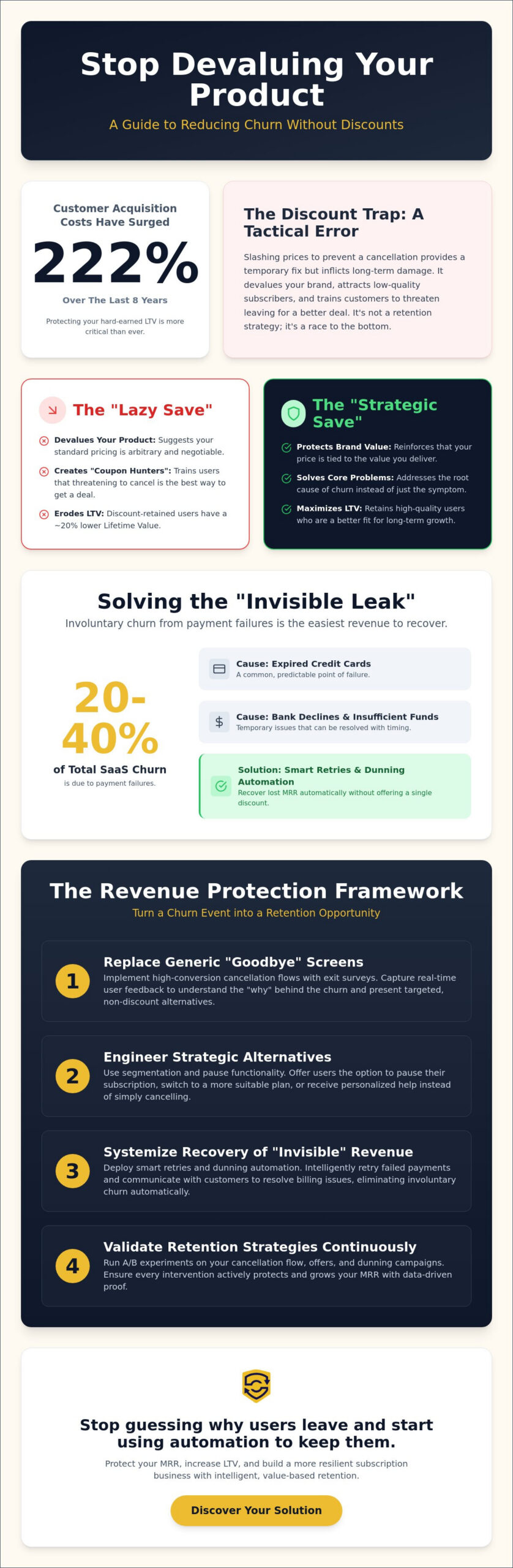
Slashing prices to save a cancellation doesn’t protect your revenue; it devalues your product and effectively trains customers to wait for the next coupon. If you want to maintain a healthy Net Revenue Retention (NRR) in 2026, you must learn how to reduce churn without discounts. You’ve likely felt the pressure of rising customer acquisition costs, which have surged by 222 percent over the last eight years. It’s frustrating to watch your hard-earned LTV erode because of a “cancel” button that feels like a black hole for your data and your margins.
We understand that every lost subscriber represents a significant hit to your valuation. This article reveals why price-slashing is a tactical error and how to protect your MRR using automated, value-based interventions. You’ll discover how to maintain high LTV while reducing gross churn through precise, intelligent systems. We will examine the mechanics of high-performance cancellation flows, dunning automation, and the data-driven strategies needed to turn a churn event into a retention opportunity. It’s time to stop guessing why users leave and start using automation to keep them.
Key Takeaways
- Stop the erosion of Net Revenue Retention by identifying why reactive price-slashing attracts low-quality subscribers and devalues your brand.
- Systemize your recovery of “invisible” revenue by deploying smart retries and dunning automation to eliminate involuntary churn.
- Engineer strategic alternatives to cancellation by using segmentation and pause functionality to reduce churn without discounts.
- Replace generic “goodbye” screens with high-conversion cancellation flows that utilize exit surveys to capture real-time user feedback.
- Validate your retention strategies through continuous AB experiments to ensure every intervention actively protects and grows your MRR.
The Discount Trap: Why Price Slashing Destroys Long-Term SaaS Value
SaaS operators often view a discount as a quick win. It isn’t. This “Lazy Save” provides an immediate dopamine hit to your retention metrics while quietly poisoning your Net Revenue Retention (NRR). When you slash prices to stop customer churn, you aren’t solving a business problem. You’re simply subsidizing a mismatch between your product’s value and the user’s perception of it. This tactical error attracts low-quality subscribers who are fundamentally unattached to your core offering. They stay for the promotion, not the solution, and they’ll inevitably churn the moment your promotional period ends. You haven’t retained a customer; you’ve delayed a departure at the expense of your brand’s integrity.
Contrast this with a “Strategic Save.” Instead of lowering the price, you identify the specific friction point and deploy a targeted intervention. To reduce churn without discounts, you must move beyond the mindset of price-based negotiation. High-performance brands understand that every discount offered during a cancellation flow is a signal of weakness. It suggests that your standard pricing is arbitrary and that your product’s value is negotiable. This destroys your positioning and complicates your path to enterprise-level valuations.
The Psychology of Devaluation
Offering a discount the moment a user clicks “cancel” sends a dangerous message. It confirms their suspicion that your product was overpriced from the start. This creates a “Coupon Hunting” cycle. Users learn that the path to a better deal isn’t through loyalty or higher usage, but through the threat of departure. You’ve effectively trained your most price-sensitive customers to hold your MRR hostage. Statistics suggest that companies relying on discounts for retention often see a 20 percent lower LTV compared to those who focus on value-based retainers. You must use dynamic offers that solve problems, such as free training or temporary feature unlocks, rather than just cutting the bill.
Impact on Customer Lifetime Value (LTV)
The math of a “save” discount is often deceptive. A 20 percent discount over 12 months doesn’t just cost you 20 percent of that user’s revenue. It erodes your margins because the cost of support and infrastructure remains static. Frequently, a saved customer at a lower price point costs more in manual support load than their remaining MRR justifies. This creates a ripple effect across your entire ecosystem. These discounted users skew your customer segmentation data, making it harder to identify your ideal high-value profiles. You end up with a “zombie” segment: users who stay for the price but never achieve the product-market fit required for long-term growth. Protecting your LTV requires a disciplined refusal to devalue your labor.
Solving the Invisible Leak: Reducing Involuntary Churn via Smart Retries
Revenue loss isn’t always a decision made by your customer. Involuntary churn, often called passive churn, occurs when a subscription fails due to technical friction rather than a lack of product value. This includes expired credit cards, temporary bank declines, or network timeouts. While voluntary departures require strategic persuasion, involuntary churn is a mechanical failure that you can solve with technology. It represents the most efficient way to reduce churn without discounts because it requires zero price concessions or feature giveaways. You simply recover the revenue that was already yours. Research indicates that payment failures account for 20 to 40 percent of total churn for SaaS companies. Ignoring this segment means you’re losing a significant portion of your revenue to solvable technical errors.
Implementing sophisticated customer retention strategies involves more than just keeping users happy; it requires a robust infrastructure for payment recovery. By fixing these invisible leaks, you protect your MRR without devaluing your offering or training your customers to expect lower prices. This approach ensures that your growth is built on a stable foundation of recovered revenue rather than a cycle of constant acquisition to replace lost users.
The Logic of Smart Payment Retries
Generic billing systems retry failed payments at arbitrary intervals. This is inefficient and often results in permanent declines. Smart retries utilize machine learning to analyze the optimal time of day and month to retry a specific card type based on historical success rates. For example, retrying a consumer card on a Friday evening might yield better results than a Monday morning when bank fraud filters are more aggressive. Smart retries are an automated mechanism that optimizes transaction timing to maximize success rates. This proactive approach eliminates friction before the user even realizes there was a problem, preserving the user experience and your margins.
Dunning Automation vs. Manual Outreach
Manual outreach is slow and often perceived as aggressive debt collection. Automated dunning sequences shift the narrative toward service continuity. Instead of a “pay us now” demand, high-performance flows notify users that their access is at risk and provide a seamless path to update payment details via a secure portal. Industry benchmarks suggest that companies using automated dunning flows increase their recovery rates by up to 30 percent compared to manual efforts. By integrating smart retries with these automated emails, you create a multi-layered defense against revenue loss. You maintain the relationship without ever needing to offer a financial incentive to stay. If you’re ready to plug the leaks in your billing system, you can start optimizing your revenue recovery today.
Value-Based Interventions: Using Pause and Segmentation to Preserve MRR
The “cancel” button shouldn’t be a binary exit. Many users who initiate a cancellation aren’t necessarily finished with your product; they’re often responding to temporary stressors like seasonal downtime, budget freezes, or project shifts. To reduce churn without discounts, you must shift the narrative from “leaving” to “taking a break.” This is where sophisticated subscription pause functionality becomes a strategic asset. Unlike a discount, which permanently erodes your margins, a pause preserves the integrity of your pricing while keeping the user within your ecosystem. It’s a high-performance alternative that prioritizes long-term brand value over short-term metrics.
A data-driven approach to retention requires understanding the “profit lift” of every save. As outlined in the Harvard Business School working paper Managing Churn to Maximize Profits, generic tactics often fail because they don’t account for the varying value of different customer segments. By leveraging customer segmentation, you can deploy interventions that are proportional to the user’s lifetime value and current engagement levels. This ensures your retention efforts are both efficient and profitable.
The Power of Subscription Pause Functionality
Psychologically, “Pause for 30 days” is a much lower hurdle than “Cancel Forever.” It allows users to solve their immediate problem (cost or lack of time) without the emotional weight of a permanent breakup. From a technical perspective, a pause is superior to a cancellation because it maintains the user’s “Habit Loop.”
- Data Integrity: User configurations, historical reports, and custom integrations remain intact.
- Frictionless Return: Reactivating a paused account takes one click; rebuilding a cancelled one requires a full re-onboarding.
- Future Revenue: A paused user is a delayed payment; a cancelled user is a lost asset.
This mechanism is particularly effective for B2B SaaS where seasonal cycles or project-based usage are common. It bridges the gap during a customer’s downtime without forcing them to sever ties with your infrastructure.
Segmenting Saves Based on User Behavior
Not every user deserves the same save path. If your churn metrics indicate a user has high activity but is cancelling due to “cost,” a pause or a temporary “maintenance mode” is the logical intervention. Conversely, a user with low activity might benefit more from a “lite” plan or a series of educational webinars to rediscover the product’s value. This tailored approach is a fundamental part of improving subscriber lifetime value. By matching the intervention to the specific friction point, you protect your MRR without ever needing to resort to the “Lazy Save” of a blanket discount. You maintain control over your business outcomes by treating retention as a data-driven science rather than a desperate negotiation.
Building a High-Conversion Cancellation Flow Without Price Incentives
A “Goodbye” screen is a wasted opportunity. High-performance SaaS companies treat the cancellation process as a strategic interaction designed to recover revenue and gather intelligence. Relying on manual customer success interventions to save accounts is a logistical failure at scale. It’s expensive. It’s inconsistent. Most importantly, it’s too slow. By the time a human agent reaches out, the user has already mentally checked out. To reduce churn without discounts, you must deploy an automated, responsive system that intervenes the second a user expresses intent to leave. This ensures that every departure is either prevented or fully understood.
Automated save flows outperform manual outreach because they provide immediate, relevant alternatives based on real-time data. They operate 24/7, ensuring that a user in any time zone receives a personalized experience without increasing your support overhead. You can build your high-conversion cancellation flow today to start protecting your MRR with precision automation.
Exit Surveys as a Retention Tool
The first step in any sophisticated flow is the implementation of exit surveys. These aren’t just compliance checkboxes; they’re diagnostic tools. You must craft survey questions that lead naturally to a “Save” offer. If a user selects “Too complex,” your system shouldn’t offer a discount. It should offer a solution. By using feedback analysis, you can identify recurring friction points across your entire user base. AI feedback analysis transforms qualitative exit data into quantitative product roadmaps. This allows you to fix the root causes of churn rather than just treating the symptoms.
Dynamic Offers: Alternatives to Price Cuts
Once you’ve identified the reason for departure, you must deploy dynamic offers that address that specific pain point. Feature-based saves are significantly more effective than price reductions for maintaining brand value. For example, if a user cites “missing features,” offering a free month of a premium add-on is a better save than a 20 percent discount. It demonstrates the product’s expanded value rather than suggesting it’s worth less than the sticker price. You can explore more tactics in our guide on Dynamic Cancellation Offers.
If a user is adamant about leaving due to budget, consider a “Downgrade to Free” tier. This keeps the user in your marketing funnel and preserves their data, making future reactivation much easier. You keep the relationship alive without devaluing your paid tiers. This methodical approach ensures you retain the highest possible LTV while maintaining a professional, data-driven brand image.
Automating Revenue Protection: The Churn Solution Framework
Transitioning from reactive discounting to proactive revenue protection requires a systemic shift in how you view the subscription lifecycle. You cannot manualize your way out of high churn volumes without sacrificing your margins or your team’s sanity. Automation is the only viable path to scale retention efforts without increasing your headcount. By implementing a unified framework, you transform retention from a defensive struggle into a high-performance growth engine. This approach allows you to reduce churn without discounts by deploying the right intervention at the exact moment of friction. It’s about building a resilient ecosystem that protects your MRR while you focus on product innovation.
Continuous optimization is the heartbeat of this framework. You must utilize AB experiments to refine your save flows, testing different value-based offers against each other to see what truly resonates with your specific segments. This isn’t about guessing; it’s about using hard data to determine which “Pause” duration or “Feature Unlock” maximizes long-term Net Revenue Retention (NRR). Every experiment provides a clearer picture of your user’s needs, allowing you to iterate toward a near-zero churn state.
Empowerment is equally critical to this strategy. A sophisticated customer portal puts the controls back in the user’s hands. It allows them to manage their own retention by providing clear, accessible options to pause, downgrade, or switch plans without needing to contact support. This reduces the manual support load while giving the user a sense of autonomy. When a user feels in control of their spending, they’re less likely to sever the relationship entirely.
Scaling Retention with AI and Data
Advanced retention systems now use AI to predict churn before a user even considers clicking the cancel button. By monitoring engagement signals and usage patterns, you can intervene earlier in the customer lifecycle with targeted education or feature highlights. A centralized dashboard for monitoring NRR and Gross Churn provides the visibility needed to make high-stakes business decisions with confidence. In 2026, value-based retention is no longer a luxury; it’s a decisive competitive advantage in a saturated SaaS market. Those who rely on data to keep their users will always outperform those who rely on coupons.
Next Steps: Implementing Your Save Flow
Examine your current cancellation process. Is it merely a “Confirm” button that facilitates revenue loss? If so, you’re leaving significant MRR on the table every month. Auditing your flow is the first step toward recovery. Churn Solution integrates seamlessly with your existing billing engine, such as Stripe, to provide a layer of intelligent protection over your revenue. You can stop the “Lazy Save” cycle and start building a more resilient, profitable business immediately. Protect your subscription revenue with Churn Solution today.
Secure Your MRR with Value-Driven Automation
Retaining your subscribers in a high-stakes economy requires a shift from desperate discounting to technical mastery. You’ve seen how involuntary churn can be neutralized with smart retries and how value-based interventions, such as subscription pauses, preserve your product’s perceived worth. By implementing these automated systems, you can effectively reduce churn without discounts while maintaining the premium positioning of your brand. It’s about solving the user’s core friction rather than just subsidizing their departure.
You don’t have to leave your revenue to chance. With an automated Stripe integration and AI-powered feedback insights, you can transform your cancellation flow into a high-performance recovery engine. Our framework allows you to recover up to 40 percent of cancelling subscribers by providing the right offer at the exact moment of intent. It’s time to stop the erosion of your NRR and start building a more resilient, data-driven subscription business. Stop the revenue leak; Start your free Churn Solution trial. Your growth is waiting for a more intelligent approach to retention.
Frequently Asked Questions
Is it possible to reduce churn without offering any discounts?
Yes, it’s entirely possible and strategically superior. You reduce churn without discounts by deploying value-based interventions that address the specific friction points identified during the cancellation process. This approach protects your margins while ensuring that your retained customers remain high-value assets rather than subsidized liabilities. By focusing on utility rather than price, you maintain the integrity of your brand’s positioning.
What are the best alternatives to discounts in a cancellation flow?
High-performance alternatives include temporary feature unlocks, free educational training, or account pauses. These options solve the underlying problem, such as product complexity or temporary budget shifts, without devaluing your labor. By offering a solution instead of a price cut, you reinforce the product’s utility. This shift ensures that your “save” attempts are seen as helpful interventions rather than desperate negotiations.
How does subscription pause functionality compare to a discount for retention?
Subscription pause functionality is a strategic delay, whereas a discount is a permanent revenue loss. Pausing keeps the user’s data and habit loop intact, making reactivation a single-click process. It bridges the gap during seasonal downtime or budget freezes without forcing the user to sever their connection to your ecosystem. This preserves your MRR in the long term and avoids the margin erosion associated with price slashing.
Can I use exit surveys to stop a customer from cancelling?
Exit surveys function as a diagnostic tool to trigger real-time save offers. When a user selects a specific reason for leaving, your system can immediately present a dynamic offer that mitigates that exact concern. This turns a generic “Goodbye” screen into a strategic interaction. You capture feedback and recover revenue simultaneously by matching the remedy to the specific cause of departure.
What is involuntary churn and how can I fix it without manual work?
Involuntary churn is revenue lost to payment failures, accounting for 20 to 40 percent of total SaaS churn. You fix this by deploying smart retries and dunning automation. These tools use AI to optimize transaction timing and automate recovery emails. This eliminates the need for manual outreach while ensuring that your billing system recovers revenue that was already earned.
How do I know if my retention strategy is devaluing my brand?
Your strategy is likely devaluing your brand if you notice a “coupon hunting” cycle where users threaten cancellation just to secure a lower rate. If your saved customers show a 20 percent lower LTV than standard users, your discounting is likely cannibalizing your long-term value. Shift to value-based saves to protect your positioning and ensure your product isn’t viewed as a commodity.
What metrics should I track to measure the success of non-discount saves?
Focus on Net Revenue Retention (NRR), Gross Churn, and the LTV of your saved segments. Tracking the success of non-discount saves requires monitoring how many users return to full usage after a pause or a feature unlock. These metrics provide a clear picture of whether your interventions are actually protecting your bottom line or just delaying an inevitable departure.
Does automated reactivation work better than manual win-back emails?
Automated reactivation flows outperform manual win-back emails because they operate with immediate precision. They trigger the moment a user’s status changes, providing a personalized incentive based on their historical usage data. This ensures your win-back campaigns are scalable and consistently effective. You maintain a high-performance recovery engine without increasing your team’s manual workload or support overhead.
- Key Takeaways
- Table of Contents
- The Discount Trap: Why Price Slashing Destroys Long-Term SaaS Value
- Solving the Invisible Leak: Reducing Involuntary Churn via Smart Retries
- Value-Based Interventions: Using Pause and Segmentation to Preserve MRR
- Building a High-Conversion Cancellation Flow Without Price Incentives
- Automating Revenue Protection: The Churn Solution Framework
- Secure Your MRR with Value-Driven Automation
- Frequently Asked Questions

Churn solution that turns your customers right around.
Related Articles
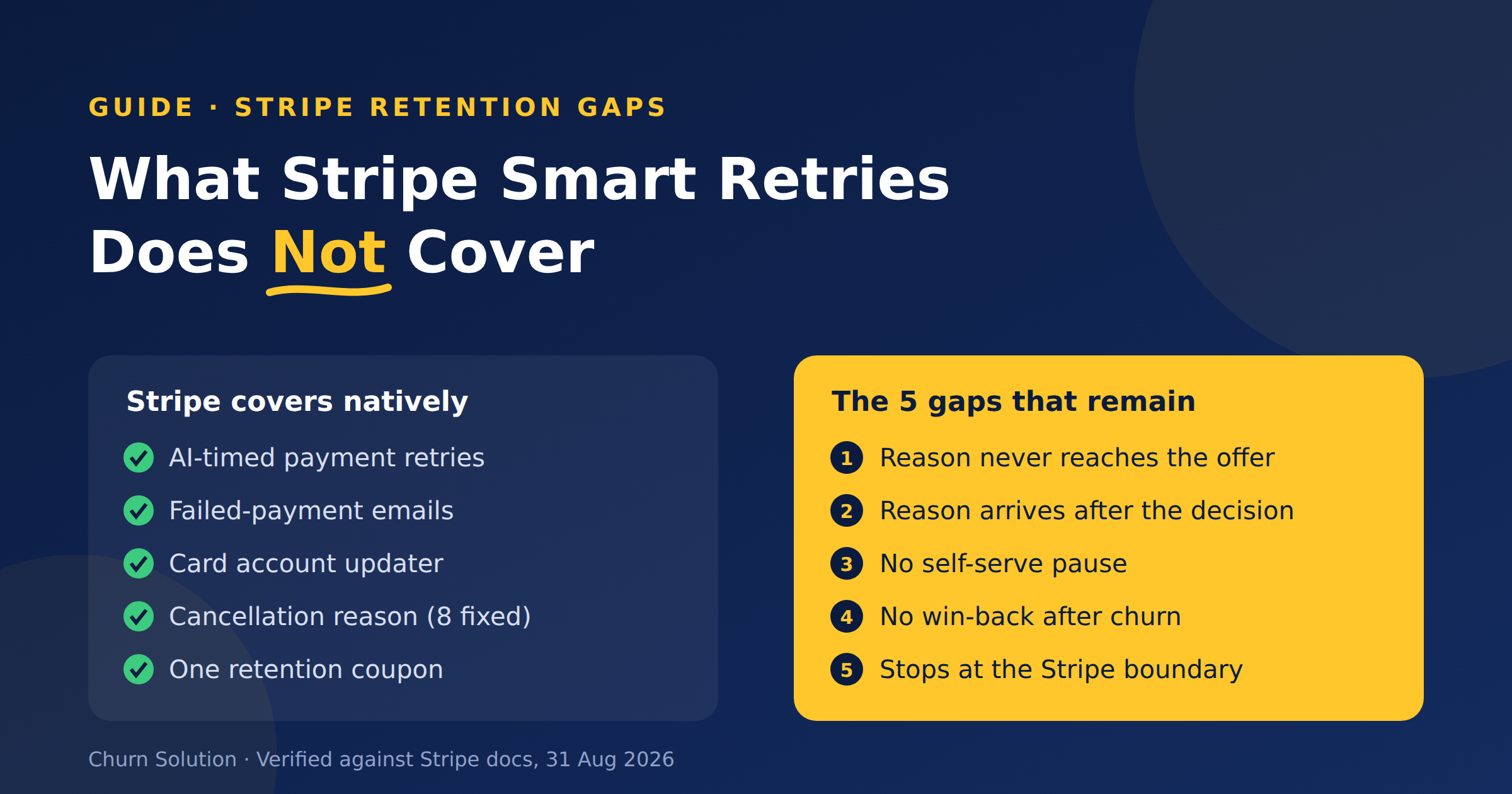
What Stripe Smart Retries Does Not Cover
Stripe Smart Retries recovers failed payments but doesn't run retention. Here are the five gaps that remain, sourced from Stripe's...

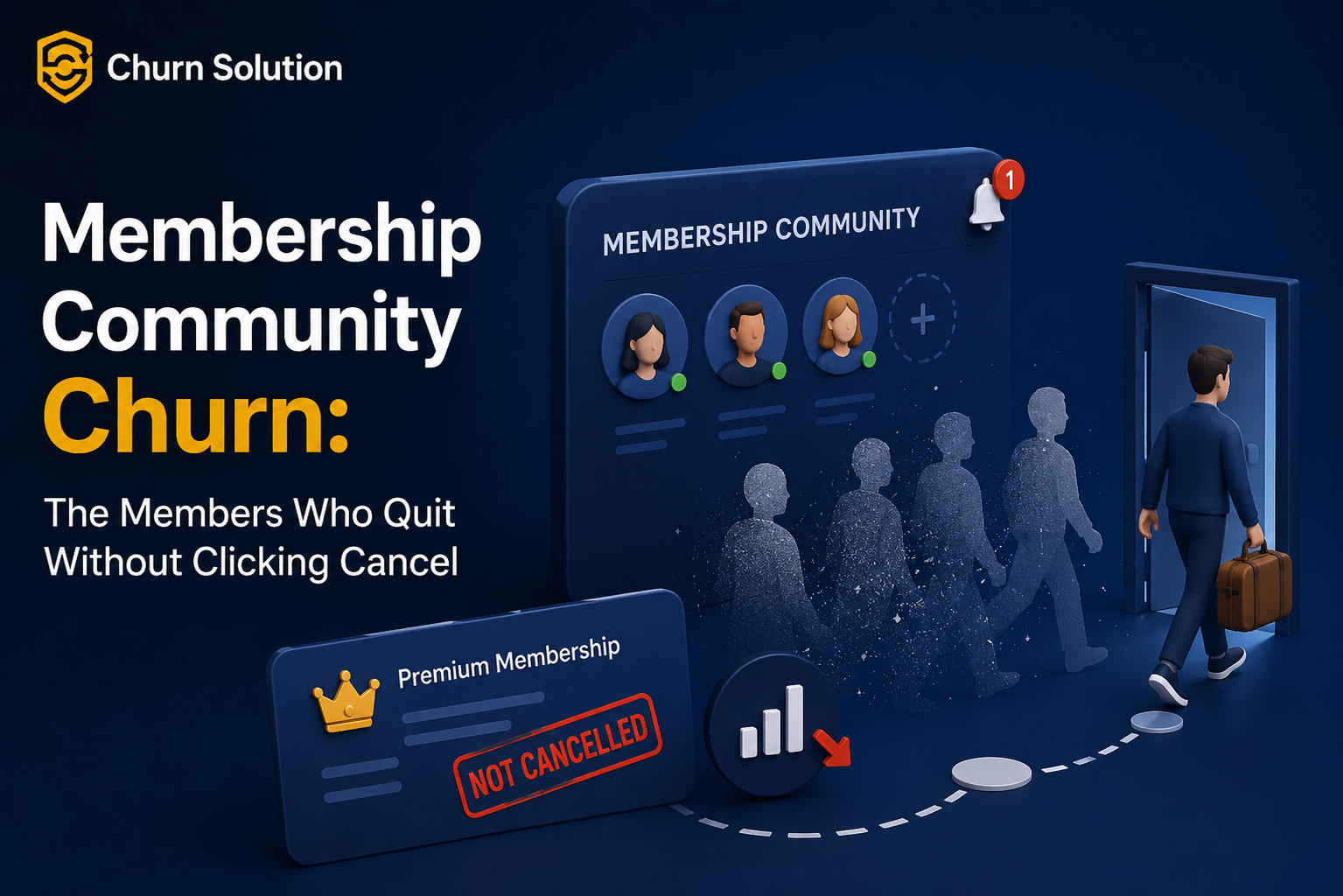
Membership Community Churn: The Members Who Quit Without Clicking Cancel
Quiet churn is the real leak: members who never clicked “cancel” at all. A card expires. A bank declines a...

Subscription Churn Dashboard: The 2026 Guide to Actionable Revenue Intelligence
Up to 40% of subscription churn is involuntary, meaning your customers aren't choosing to leave; they're being forced out by...