ARTICLE
Mastering Customer Departure Insights: The 2026 Guide to Reducing Subscription Churn

With the median annual B2B SaaS churn rate hovering between 10% and 12% in 2026, most leaders are still guessing why their subscribers are walking out the door. You’ve likely stared at a spreadsheet of messy, qualitative feedback and realized that manual analysis is a recipe for execution debt. It’s frustrating to lose revenue to competitors when the answers are buried in your own data. We agree that raw feedback is useless without a system to decode it. That is where customer departure insights become your most powerful competitive advantage.
This guide will show you how to transform exit data into a strategic retention engine using proven feedback frameworks and AI analysis. You’ll learn to implement automated categorization and extract actionable signals that lead to higher LTV. We’re moving past simple dashboards to a world where your data actively dictates your next win-back move. It’s time to stop the revenue leak and start mastering the science of why they leave. By the end of this article, you will have a clear blueprint for turning every cancellation into an opportunity for growth.
Key Takeaways
- Distinguish between quantitative churn metrics and the qualitative “why” to address the root causes of revenue loss.
- Embed strategic exit surveys directly into your cancellation flow using the Rule of Three to capture high-quality data without increasing friction.
- Scale your response processing with AI feedback analysis to extract systemic customer departure insights from thousands of manual comments.
- Utilize specialized templates to pinpoint exactly where users perceive value gaps or which competitors are attracting your segments.
- Trigger real-time recovery mechanisms like dynamic offers and account pauses based on specific feedback signals to maximize lifetime value.
What Are Customer Departure Insights?
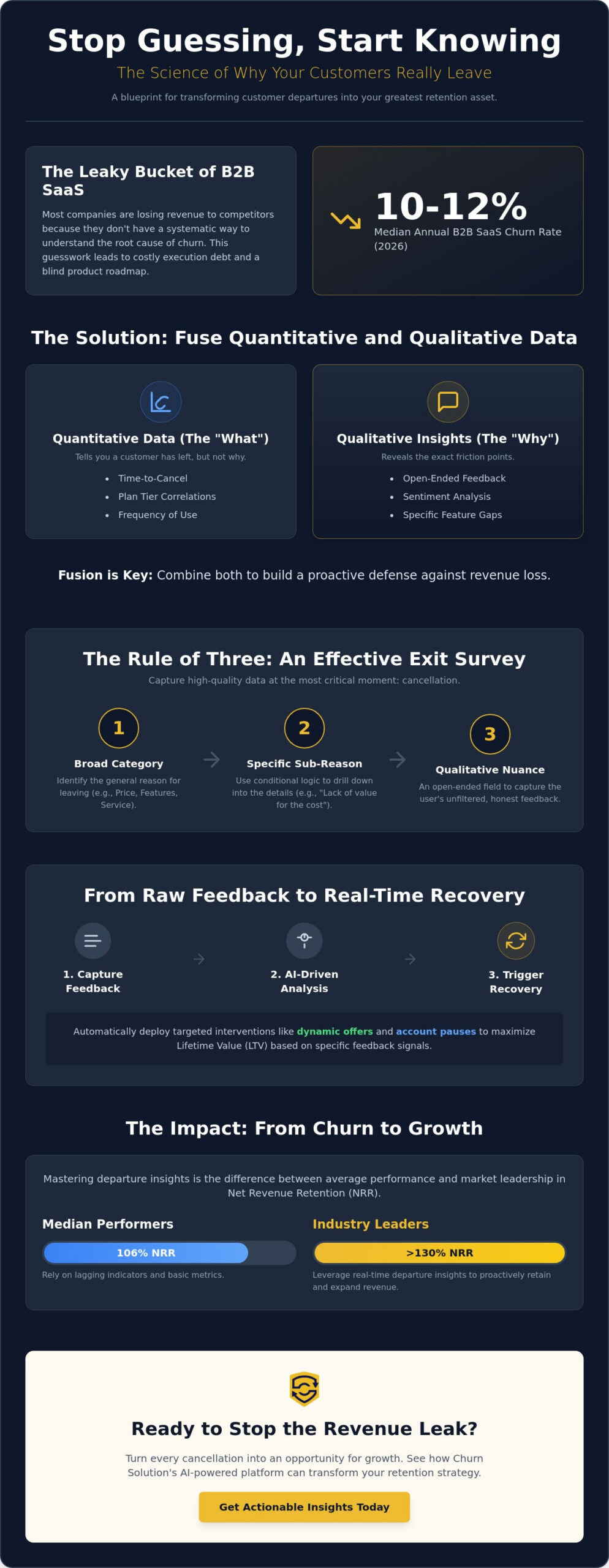
Revenue retention is not a guessing game; it is a clinical process of understanding why users walk away. While traditional churn metrics tell you that a customer has left, customer departure insights reveal the exact friction points that caused the exit. This data is the qualitative feedback captured the moment a user initiates a cancellation. It represents the “why” behind the “what.” In 2026, where the median B2B SaaS churn rate sits between 10% and 12%, relying on lagging indicators is a strategic failure. You need real-time loops to maintain a healthy Net Revenue Retention (NRR), which currently averages 106% for median performers but exceeds 130% for industry leaders.
The psychology of a departing customer provides a unique advantage. This is the most honest data your organization will ever receive. Once a user decides to leave, the social pressure to be polite vanishes. They are no longer interested in feature requests or future promises. They want out. This clarity allows you to see your product through a lens of brutal, unvarnished truth. Understanding Customer attrition at this granular level is the only way to build a proactive defense against revenue loss. It transforms a moment of loss into a high-performance intelligence signal.
Quantitative vs. Qualitative Departure Data
Quantitative data provides the skeleton of your churn profile. It includes metrics like time-to-cancel, plan tier correlations, and frequency of use. These numbers are vital, yet they lack context. Qualitative data provides the muscle. This includes open-ended feedback, sentiment analysis, and specific feature friction points. A complete customer churn analysis requires the fusion of both. Numbers identify the segment at risk; customer departure insights identify the cure. Without both, your retention strategy remains incomplete and reactive.
The High Cost of Ignored Feedback
Ignoring these signals creates a blind product roadmap. When you don’t know why users leave, you build features that don’t solve the core problem. This leads to a compounding effect of revenue leakage. Beyond the immediate loss of MRR, misunderstood exits fuel negative word-of-mouth. In a market where 81% of consumers believe AI is a standard part of modern service, failing to utilize automated feedback loops signals a lack of technical mastery. You aren’t just losing a customer; you’re losing the intelligence required to keep the next one. This execution debt is a major blind spot that separates CX leaders from laggards.
The Architecture of an Effective Exit Survey
Capturing customer departure insights requires more than a simple text box. To extract high-performance data, you must deploy a survey that is surgically embedded within the cancellation flow itself. Post-exit emails are often ignored; the moment of cancellation is when the user’s friction points are most vivid. By positioning the survey as a mandatory step before account closure, you ensure a data capture rate that far exceeds external methods. This is not about adding friction. It’s about establishing a diagnostic touchpoint that informs your broader customer retention strategies.
Efficiency dictates the structure. We utilize the “Rule of Three” to prevent abandonment. The first question identifies the broad category of departure. The second uses conditional logic to drill into specific sub-reasons. The third provides an open-ended field for qualitative nuances. If a user selects “Price” as their primary reason, the survey should immediately pivot to ask if the issue is a temporary budget constraint or a perceived lack of value. This conditional approach ensures that every response yields a tactical signal rather than a generic complaint. Frame these questions as a commitment to product excellence. Users are more likely to provide honest feedback when they believe their input will prevent similar frustrations for others.
Designing for Maximum Response Rates
User experience is the primary driver of response volume. High-performance exit surveys leverage “one-click” reason selections to minimize cognitive load. Incorporate a progress bar to signal that the process is nearly complete. In 2026, mobile-first design is a requirement for subscription apps. Ensure that touch targets are large and the interface is clean. A seamless design reduces the impulse to force-close the app and results in cleaner, more reliable customer departure insights. If your current system feels like a chore, you’re losing the very data you need to survive. You can start building a high-conversion survey flow to capture these signals today.
Categorizing Exit Reasons for Scalability
Raw data is a liability if it cannot be categorized. You must group feedback into standardized buckets: Pricing, Missing Features, UX Friction, and “No longer needed.” These categories allow for automated routing to specific internal teams. A “Missing Feature” insight should trigger an alert for the Product team; a “Pricing” insight belongs to Marketing or Growth. Use an “Other” field to capture emerging market trends that your predefined categories might miss. This structured approach transforms messy qualitative feedback into a scalable intelligence engine that directly informs your product roadmap and revenue recovery efforts.
Decoding the “Why”: AI-Driven Feedback Analysis
Manual analysis is a relic of the pre-automation era. It fails at scale because “feedback fatigue” sets in long before a human analyst can identify a meaningful trend. When you’re processing hundreds of cancellations monthly, the nuances of qualitative data get lost in the noise. This is where AI feedback analysis becomes an essential intervention. By deploying machine learning models, you can synthesize thousands of open-ended comments into a structured layer of customer departure insights. This technology doesn’t just read words; it understands intent. With 73% of B2B product teams now using AI-powered tools for this exact purpose, staying manual is no longer a viable option.
Modern systems use sentiment scoring to categorize the psychological state of the user. We distinguish between the “frustrated but savable” customer and the “completely detached” one. A user complaining about a specific UI friction point is often a prime candidate for recovery. Conversely, a user stating they’ve migrated to a legacy competitor requires a different strategy. Research into the Causal Analysis of Customer Churn highlights that identifying these root causes through deep learning is significantly more effective than simple correlation. High-performance teams use these customer departure insights to trigger real-time alerts. If a high-value account provides specific feedback regarding a technical failure, your success managers should know within seconds, not weeks.
Natural Language Processing (NLP) in Retention
NLP allows you to extract tactical keywords from messy exit text. It identifies competitive threats by flagging brand names mentioned in cancellation notes. If a cluster of users suddenly mentions a specific rival’s new pricing model, you have an immediate market signal to adjust your own positioning. Clustering similar complaints allows you to prioritize your product roadmap based on the actual volume of friction rather than the loudest voices in a support queue. It’s about finding the signal within the static.
Turning Qualitative Data into Quantitative Metrics
The true power of feedback analysis lies in its ability to turn words into numbers. You must build a “Churn Reason” dashboard that weights every insight by the Customer Lifetime Value (LTV) of the departing user. A feature request from an enterprise account carries more strategic weight than a complaint from a low-tier SMB user. This weighted data allows you to predict future churn cohorts with precision. It moves your retention strategy from a reactive cleanup to a proactive, data-driven defense that secures your bottom line.
Departure Insight Templates for SaaS Retention
Strategic data collection requires a blueprint. You cannot expect high-quality data from vague questions. Deploying standardized templates ensures you capture high-fidelity customer departure insights without increasing friction. These frameworks are designed to move beyond generic complaints and uncover the tactical reasons for revenue loss. By implementing specific templates, you categorize the exit intent immediately; this allows for automated recovery responses tailored to the user’s specific pain point. It’s about transforming a cancellation request into a diagnostic event.
Four core templates serve as the foundation for modern retention flows. The Value-Gap Template probes the distance between user expectation and actual product performance. It asks why the user didn’t achieve their desired outcome. The Competitor-Check Template identifies exactly where your revenue is migrating by asking which solution the user is moving to. For macro-economic shifts, the Economic-Pressure Template captures signals related to budget freezes; it triggers the correct pause or discount strategy. Finally, the UX-Friction Template pinpoints the specific workflow bottlenecks that caused the user to give up on the interface.
Standard Multi-Choice Question Frameworks
Consistency is the key to scalability. Your exit surveys should follow a structured hierarchy. Start with a single-select question to identify the primary reason for leaving. Follow this with an open-ended prompt: “What one feature would have made you stay?” This specific phrasing forces the user to prioritize their biggest grievance. Conclude with an NPS-style scale regarding their likelihood to return. This three-step approach ensures you gather both quantitative categories and qualitative depth without overwhelming the departing user.
Niche-Specific Templates
Different industries require different signals. In B2B SaaS, your customer departure insights must focus on ROI and team adoption. If the decision-maker doesn’t see a clear return on investment, the account is at risk. Consumer apps, however, should focus on habit formation and price sensitivity. For these users, the friction is often emotional or financial rather than functional. E-commerce subscriptions require a focus on frequency and inventory. If a user cancels because they have too much product on hand, a “pause” offer is more effective than a discount. You can access our full library of retention templates to start optimizing your flow today.
From Insights to Recovery: Closing the Retention Loop
Data without action is overhead. To maximize the ROI of your customer departure insights, you must wire these signals directly into your recovery infrastructure. Identification is merely the first step; execution is where revenue is recovered. By leveraging real-time data, you can trigger dynamic offers that address the specific friction point identified in the survey. This immediate response transforms a static exit into a fluid negotiation. It ensures that your retention efforts are surgical rather than generic. You aren’t just letting them leave; you’re offering a reason to stay that is grounded in their actual experience.
A high-performance “Pause” strategy is essential for users citing temporary budget or time constraints. If the feedback suggests the user simply needs a break, forcing a hard cancellation is a strategic error. Instead, offer a 30, 60, or 90-day account pause. This preserves the user’s data and maintains the relationship without the friction of a full offboarding. For those who do complete the exit, you must automate win-back campaigns that reference their specific reason for leaving. A personalized recovery sequence based on actual customer departure insights carries a significantly higher conversion rate than a blind, generic email. It proves you were listening.
Dynamic Interventions Based on Exit Intent
Tailor your intervention to the sentiment. Price-sensitive leavers should receive a targeted discount or a lower-tier plan option. Users struggling with UX friction are better served by a 1-on-1 demo or a link to a specific training module. For “no longer needed” exits, use reactivation sequences that highlight new feature releases or seasonal use cases. This categorical approach ensures you aren’t wasting discounts on users who actually need education. It optimizes your margins while protecting your subscriber base. Pairing these interventions with automated retention triggers ensures your system acts on every departure signal with the precision and speed required to recover revenue before it’s permanently lost.
Continuous Optimization with A/B Testing
Retention is an iterative process. You must use A/B experiments to find the optimal save offer for every reason category. Test different survey question phrasings to increase completion rates and refine the logic of your flows. Measuring the “Save Rate” per insight category allows you to identify which interventions are working and which need recalibration. Finally, report these findings to the Product team to reduce “Insight-to-Action” time. Closing the loop means the entire organization learns from every departure. This ensures today’s churn informs tomorrow’s growth, turning a moment of loss into a perpetual engine for product improvement.
Secure Your Revenue with Strategic Intelligence
Retaining subscribers in 2026 demands more than just identifying who left; it requires a deep understanding of why they walked away. You’ve seen how a structured cancellation flow and AI-powered feedback analysis can turn messy qualitative data into a high-performance retention engine. By closing the loop with an automated dynamic offer engine, you aren’t just observing churn. You’re actively fighting it. Relying on manual analysis or generic win-back emails is no longer a viable strategy for companies aiming for top-tier NRR. It’s time to leverage technology that works at the speed of your business.
Mastering customer departure insights is the most direct path to plugging revenue leaks and optimizing your product roadmap. With a seamless Stripe integration and advanced feedback processing, you can deploy these sophisticated interventions in minutes. Don’t let valuable data vanish with every cancellation. You have the tools to turn every exit into a diagnostic signal for future growth. The transition from reactive recovery to proactive intelligence starts now.
Stop the leak. Start capturing departure insights with Churn Solution today.
Frequently Asked Questions
What are customer departure insights?
Customer departure insights are the qualitative data points captured at the precise moment a user initiates a cancellation. Unlike generic churn metrics that only track the volume of loss, these insights reveal the specific friction points causing the exit. They represent the unvarnished truth about your product’s performance and market fit. By capturing this data, you transform a revenue loss into a strategic asset for future retention.
Why are exit surveys better than standard feedback forms?
Exit surveys are superior because they capture feedback when the user’s pain points are most acute. Standard feedback forms often suffer from low response rates and lack the contextual relevance of a departure event. By embedding a survey directly into your cancellation flow, you achieve higher data fidelity and capture the psychological clarity of a departing user. This allows for immediate, automated interventions that generic forms cannot trigger.
How do I analyze open-ended feedback from thousands of departing customers?
Analyzing open-ended feedback at scale requires AI Feedback Analysis to synthesize thousands of comments into actionable signals. Manual categorization is inefficient and leads to execution debt. AI models use sentiment scoring and keyword extraction to identify systemic patterns across your entire user base. This technical approach allows you to prioritize fixes based on the actual volume of friction rather than anecdotal evidence.
Can I prevent customers from leaving by asking for insights?
You can prevent exits by using the customer departure insights gathered to trigger dynamic offers in real-time. If a user cites price or a temporary budget constraint, your system can immediately present a discount or an account pause. This turns a static cancellation process into a fluid recovery negotiation. While not every user will stay, this diagnostic touchpoint creates an opportunity to save high-value accounts that would otherwise walk away.
What are the most common reasons customers leave a subscription service?
The most common drivers of churn include a perceived lack of value, missing technical features, and UI friction. In 2026, many users also cite economic pressure or migration to competitors with better ROI. Standardized categorization helps you group these exits into buckets like Pricing, UX Issues, or Feature Gaps. Identifying these common threads is the first step in building a proactive defense against revenue leakage.
How do I use departure insights to improve my product roadmap?
Use customer departure insights to prioritize your product roadmap by weighting feedback against the Customer Lifetime Value (LTV) of the departing user. If high-value enterprise accounts consistently cite a specific missing feature, that item moves to the top of the development queue. This data-driven strategy ensures your engineering resources are focused on the friction points that cause the most significant revenue loss.
Should I offer a discount to every customer who provides feedback during cancellation?
You shouldn’t offer a discount to every user; instead, match the offer to the specific exit reason. Offering a discount to a user who is leaving due to UX friction is ineffective and erodes your margins. Use dynamic logic to present discounts only to price-sensitive segments. Users struggling with functionality should receive training resources or a 1-on-1 demo invitation to address their core problem.
How often should I update my departure insight templates?
Update your templates at least quarterly or immediately following major product updates and market shifts. Consumer behaviors and competitive landscapes evolve rapidly in the subscription economy. Regular audits of your survey questions ensure you are capturing the most relevant signals for your current business environment. Use A/B experiments to test new question phrasings and maintain high completion rates within your cancellation flows.
- Key Takeaways
- Table of Contents
- What Are Customer Departure Insights?
- The Architecture of an Effective Exit Survey
- Decoding the "Why": AI-Driven Feedback Analysis
- Departure Insight Templates for SaaS Retention
- From Insights to Recovery: Closing the Retention Loop
- Secure Your Revenue with Strategic Intelligence
- Frequently Asked Questions

Churn solution that turns your customers right around.
Related Articles
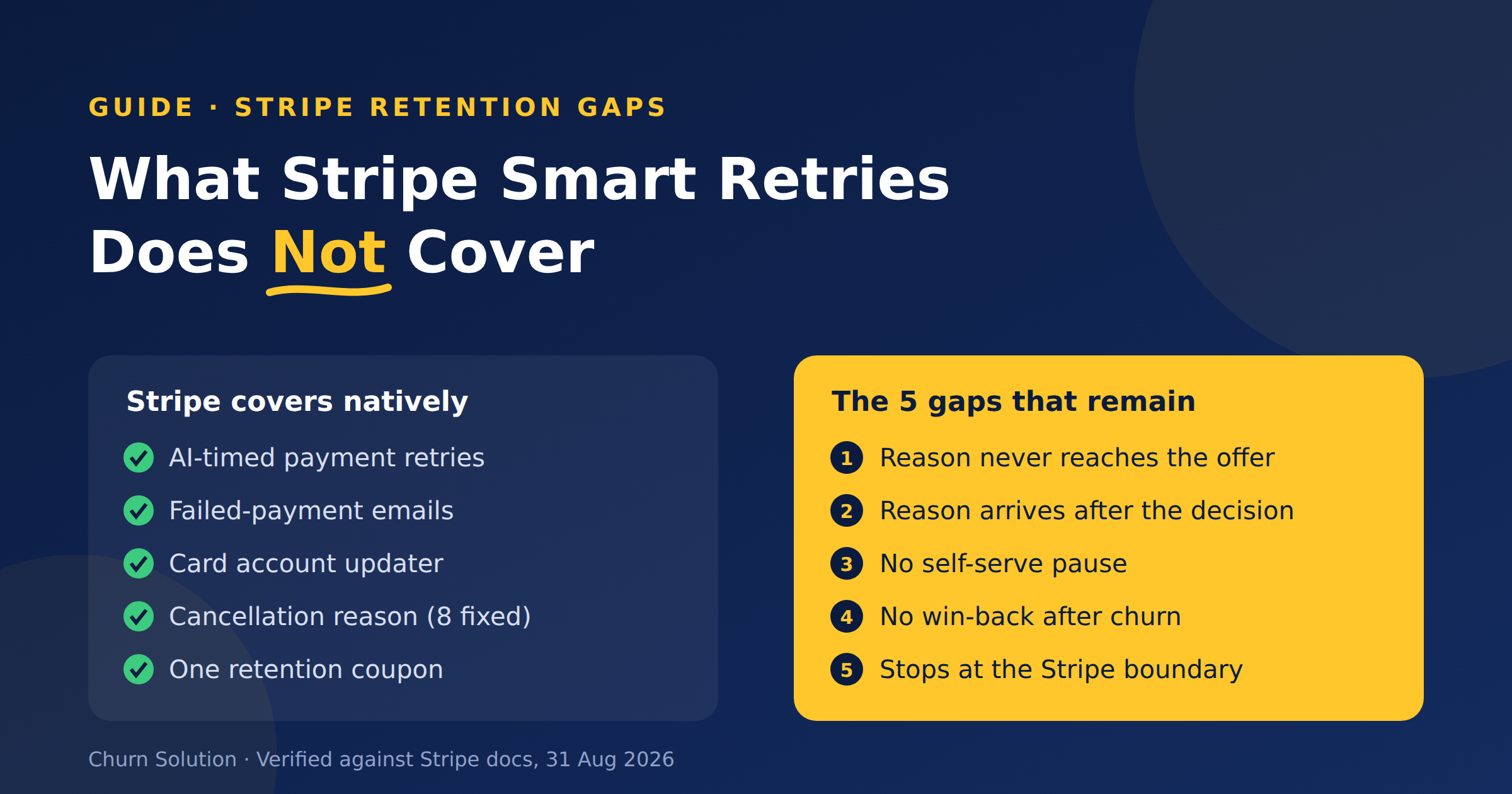
What Stripe Smart Retries Does Not Cover
Stripe Smart Retries recovers failed payments but doesn't run retention. Here are the five gaps that remain, sourced from Stripe's...

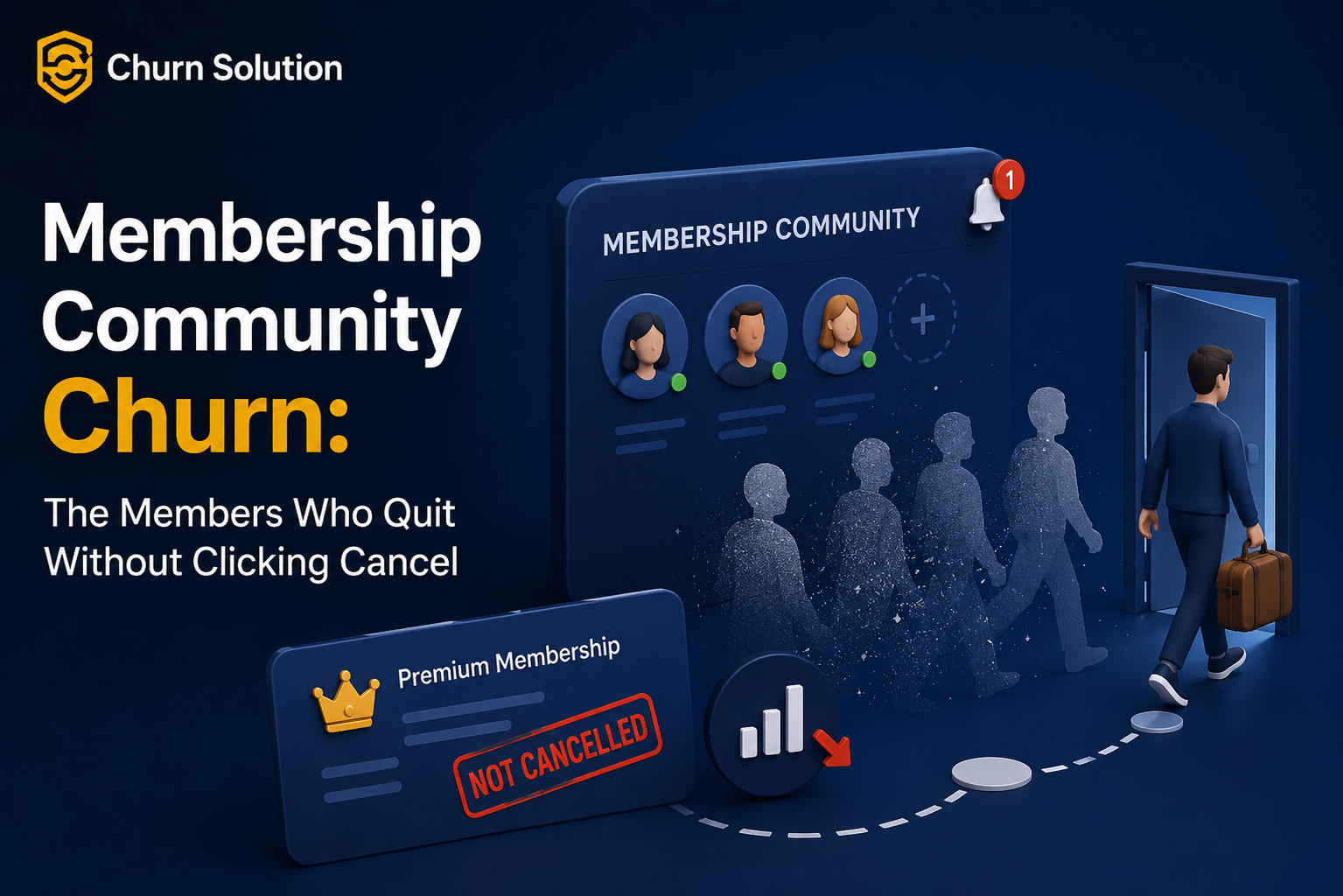
Membership Community Churn: The Members Who Quit Without Clicking Cancel
Quiet churn is the real leak: members who never clicked “cancel” at all. A card expires. A bank declines a...

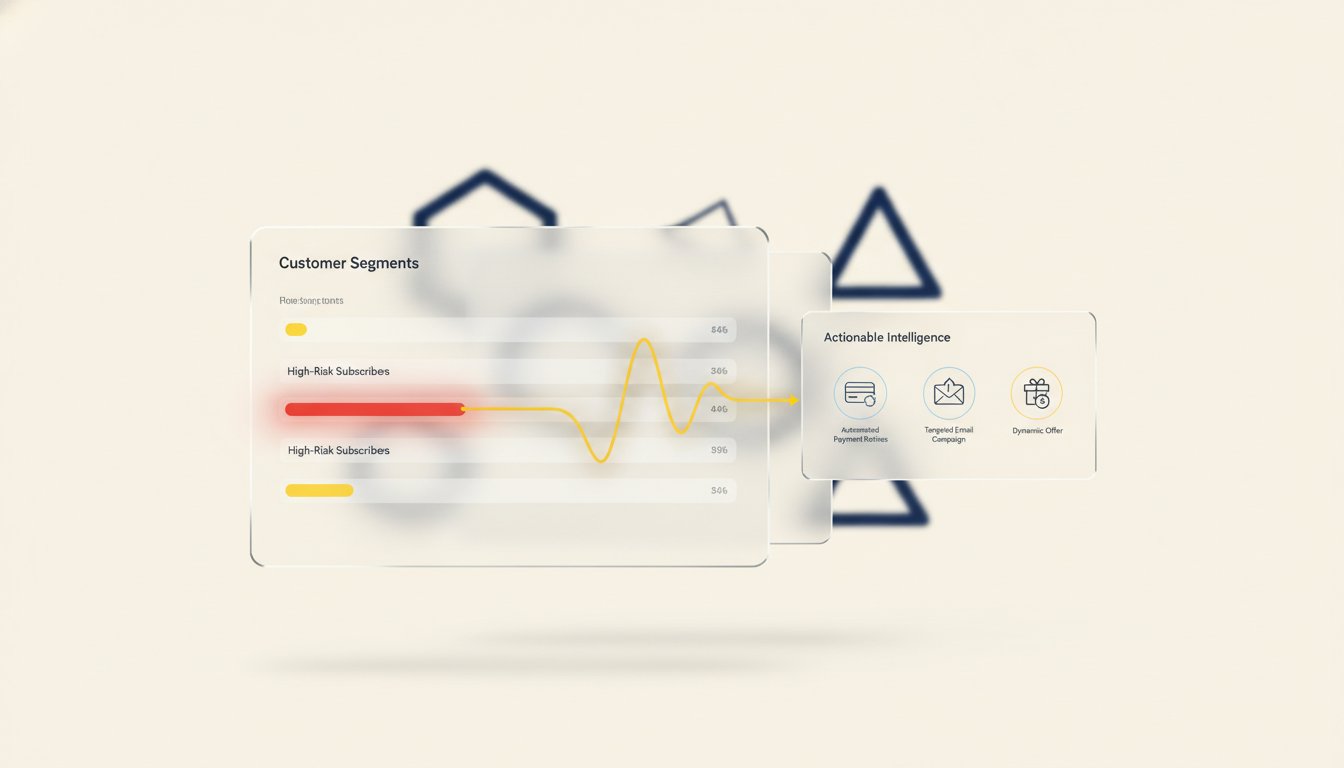
Subscription Churn Dashboard: The 2026 Guide to Actionable Revenue Intelligence
Up to 40% of subscription churn is involuntary, meaning your customers aren't choosing to leave; they're being forced out by...